
Last Updated on August 30, 2018
Colombia’s National Civil Registry has finally promised to take action to correct thousands of outrageous identity cards that government notaries issued to the Indigenous Wayuu People.
The head of the National Registry, Ariel Sanchez, upon hearing a video report (Spanish only) from Elespectador.com, expressed that anyone who has been identified in a humiliating and degrading way “obviously” has the right to correct their names. “The registry is prepared to proceed accordingly to correct the names that generate inconsistency or appear to be ridiculous,” Sanchez said.
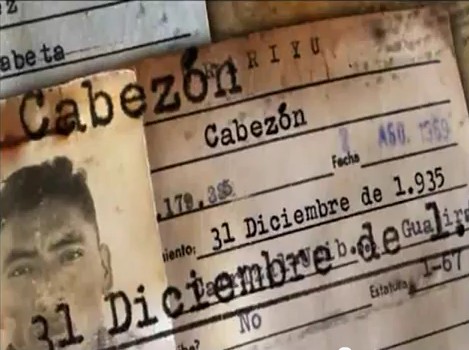
According to the report, as many as 50,000 Wayuu have received official ID cards that don false and degrading names like “Tarzan”, “Alka-Seltzer,” “Pocket,” “clown,” “gorilla,” “heroine,” and “cappuccino” among many others.
Estercilia Simanca Pushaina, a lawyer, writer, and Wayuu leader, told Elespectador.com that the practice of falsely identifying the Wayuu has been going on for generations. “I saw many names that violate human dignity,” she said.
Pushaina explained that many ID cards also identify the Wayuu as being illiterate, even if they can read or write. The cards also frequently list a common birthday of December 31.
Earlier this year, a documentary film titled “We were born on December 31st” put a spotlight on the shameful Wayuu mockery.
Shortly after it was released, the film’s director explained that “When the officials asked them in Spanish what name they wanted, they clearly didn’t understand and remained silent, and then the officials imposed these names on them,” along with the false information.
Fortunately, the so-called “joke” seems to be a thing of the past. According to Sanchez, the last degrading ID’s were issued before 2000. But even so, the existing ID’s continue to leave a stain on the Wayuu People.
It’s legally mandatory for all citizens in Colombia to carry their ID card with them at all times and to present it to authorities upon request. They must also present the card when taking part in elections, which is something the Wayuu are known to do, strategically, to help their families and communities.
At this point, it’s not clear how the Registry is going to replace “thousands” of ID cards. Under normal circumstances, it costs about $50.00 for one new card. Two thousand cards would cost more than $100,000 and that doesn’t even include travel expenses. Sufficed to say, the Wayuu would quickly find themselves bankrupt.
It appears that the Registry is willing to waive the usual $50.00 fee; but there’s still the matter of getting the Wayuu to fill out a new application form and getting translators for those who don’t understand Spanish.
At the same time, it’s doubtful anyone will be held accountable for mocking the Wayuu. According to Sanchez, it’s just not clear where the responsibility lies.
Across the world right now, Indigenous peoples are facing a renewed assault on their lands, rights, and ways of life.
From extractive industries pushing deeper into ancestral territories, to governments rolling back hard-won protections,
the threat is global—and it is growing.
What makes this moment especially dangerous is how little attention it receives.
Stories like this are disappearing in real time. Mainstream media
barely covers it and the coverage is fragmented. The public is left without the context
needed to understand what is truly at stake.
That is exactly why IC Magazine exists..
For more than 20 years, IC has reported on Indigenous struggles worldwide — consistently, independently, and without compromise.
We don’t follow news cycles; we trace patterns. We don’t sensationalize; we provide context.
And when the world looks away, we stay focused.
But this work is increasingly difficult to sustain.
We refuse to lock our reporting behind a paywall. We don’t sell access through subscriptions.
And we don’t answer to advertisers. IC Magazine survives solely because readers like you choose to
support independent Indigenous journalism.
Please donate today if you can. Every contribution helps us to continue this crucial work.
Thank you,
John Ahni Schertow
Founder and Editor in Chief