Last Updated on September 27, 2018
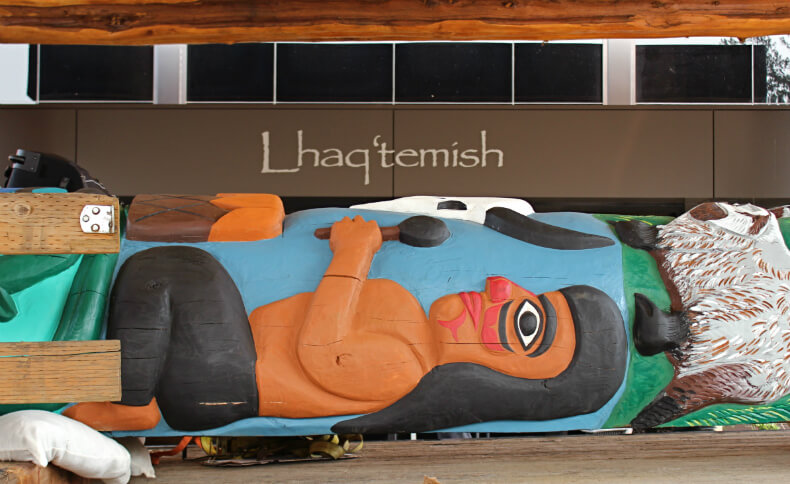
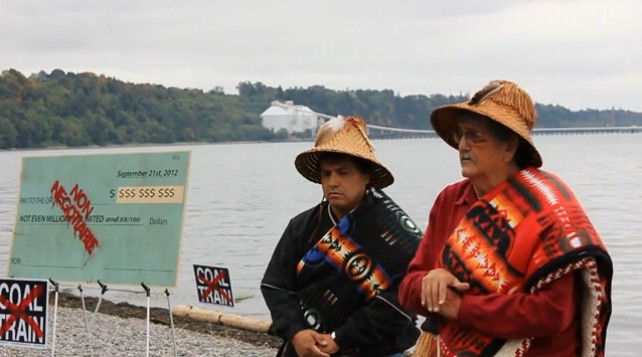
In a July 21, 2015 article in the Los Angeles Times, Crow Tribe chairman, Darrin Old Coyote, called Lummi Nation leaders “ignorant” pawns of Seattle environmental groups opposed to fossil fuel export. An important supplier of coal to power plants in the Midwest, the Crow are now in bed with mining companies seeking to ship Montana coal to Asia, from a proposed terminal in Lummi Nation’s treaty-protected fishing area at Cherry Point, located on the Salish Sea between Seattle and Vancouver.
In a Jan. 19, 2015 story at Indian Country Today Media Network, the Crow tribal government was noted for sponsoring a large billboard proclaiming, “Jesus Christ is Lord on the Crow Nation.” The “Jesus is Lord” resolution, passed unanimously in 2013 by the Crow Tribal Legislature, reflects the Crow embrace of Pentecostalism, a heritage of the California missionaries that established a Four Square Gospel Church at the Crow Reservation in 1920.
In 1951, Crow attendees at Life Bible College in Los Angeles returned to the reservation, and took a hard line against traditional Native ways. As Pentecostal Christians, the Crow Tribe is now challenging Lummi Nation’s “sacred trust” to protect the Salish Sea, reaffirmed in a June 3, 2015 press release from Coast Salish Nation, a kinship-based society of Washington Tribes and British Columbia First Nations protecting their territories from becoming a carbon corridor.
The Salish Sea – where oil trains and pipelines meet Coast Salish tribes determined to stop fossil fuel export – evokes core religious motivations in progressive churches and tribal longhouses to protect endangered species and the Indigenous cultures that revere them. Determined to stop fossil fuel export in their traditional territories, First Nations from British Columbia and Northwest Indians from Washington and Montana have forged ties with Earth Ministry and Unitarian Universalists, as well as environmental organizations like Sierra Club.
On the other side in this battle are the export terminal developers like SSA Marine (Pacific International Terminals), oil companies like Shell and BP, pipeline companies like Kinder Morgan, public relations giants like Edelman, and Burlington Northern Santa Fe Railroad (BNSF).
A third player in this cultural conflict is the Far Right milieu, exemplified by Citizens Equal Rights Alliance (CERA), Eagle Forum, and the Tea Party. Converging with these mainstream white supremacists around the fossil fuel export war are Christian Patriots and militia members experienced at intimidation and malicious harassment. With funding from SSA and BNSF, Tea Party PACs and PR fronts like Alliance for Northwest Jobs and Exports seek to “strike a most devastating psychological blow to Northwest tribes’ pride and their sense of well-being.”
Crow Chairman Old Coyote was correct when he observed that American society depends on coal to keep the lights on, but when he says “They’re ignorant to the point where they don’t want to understand where we’re coming from” (referring to the Lummi), he might be looking in a mirror.
Across the world right now, Indigenous peoples are facing a renewed assault on their lands, rights, and ways of life.
From extractive industries pushing deeper into ancestral territories, to governments rolling back hard-won protections,
the threat is global—and it is growing.
What makes this moment especially dangerous is how little attention it receives.
Stories like this are disappearing in real time. Mainstream media
barely covers it and the coverage is fragmented. The public is left without the context
needed to understand what is truly at stake.
That is exactly why IC Magazine exists..
For more than 20 years, IC has reported on Indigenous struggles worldwide — consistently, independently, and without compromise.
We don’t follow news cycles; we trace patterns. We don’t sensationalize; we provide context.
And when the world looks away, we stay focused.
But this work is increasingly difficult to sustain.
We refuse to lock our reporting behind a paywall. We don’t sell access through subscriptions.
And we don’t answer to advertisers. IC Magazine survives solely because readers like you choose to
support independent Indigenous journalism.
Please donate today if you can. Every contribution helps us to continue this crucial work.
Thank you,
John Ahni Schertow
Founder and Editor in Chief