
Last Updated on August 4, 2018
“The Abatwa are an example of the phenomenon feared by Subcomandante Marcos and the indigenous communities of the Chiapas region of Mexico, that of being so marginalized as a people that you just don’t matter any more.”
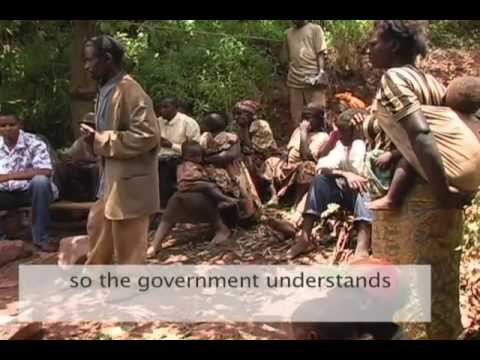
The Destruction of the Abatwa (Pygmie) Culture, produced for the 28-minute weekly cable public access program Indymedia Presents, takes a look at the largely-unnoticed struggle of the Abatwa People, more commonly known as the Pygmies.
Modern Abatwa life is a far cry from the past, when they were respected for being highly skilled traditional hunters. Today the Abatwa they have been so completely marginalized it’s like they do not exist.
This has been especially the case since 1973, when the Abatwa were thrown off their lands for an animal preserve. “The unintended consequence of the environmental victory was great destruction to Abatwa culture, and the loss of many lives.”
21 years later, the British Empire’s historical interference in Rwandan culture triggered a genocide of the Tutsi by the Hutu. As we watched on in terror, as many as 1,000,000 people were killed.
Nobody ever seemed to notice that the Abatwa were among them. Even now, few have ever reported that they were also targeted by the Hutu. The few reports that do exist, estimate between 10,000 and 30,000 Abatwa died during the months-long genocide. These are the forgotten victims.
Not much has changed since then. With fears occasionally rising that the genocide could happen again, the Abatwa find themselves being dragged to extinction. They are losing one percent of their population each year, and miscarriages are frequent because the Abatwa’s health is so extremely low and they have little or no access to aid, medicine, or social supports.
Some groups doing their best to help, like Caurwa and the Health Development Initiative – but even so, the Abatwa’s struggle for life is a losing one.
The Destruction of the Abatwa (Pygmie) Culture is the second in a series of films by Patricia Boiko from Pepperspray Productions. The first program examined the genocide in Rwanda, and how people can heal from such wanton horror.
Across the world right now, Indigenous peoples are facing a renewed assault on their lands, rights, and ways of life.
From extractive industries pushing deeper into ancestral territories, to governments rolling back hard-won protections,
the threat is global—and it is growing.
What makes this moment especially dangerous is how little attention it receives.
Stories like this are disappearing in real time. Mainstream media
barely covers it and the coverage is fragmented. The public is left without the context
needed to understand what is truly at stake.
That is exactly why IC Magazine exists..
For more than 20 years, IC has reported on Indigenous struggles worldwide — consistently, independently, and without compromise.
We don’t follow news cycles; we trace patterns. We don’t sensationalize; we provide context.
And when the world looks away, we stay focused.
But this work is increasingly difficult to sustain.
We refuse to lock our reporting behind a paywall. We don’t sell access through subscriptions.
And we don’t answer to advertisers. IC Magazine survives solely because readers like you choose to
support independent Indigenous journalism.
Please donate today if you can. Every contribution helps us to continue this crucial work.
Thank you,
John Ahni Schertow
Founder and Editor in Chief