Last Updated on June 1, 2014
https://www.youtube.com/watch?v=u2xBhSyx5IM
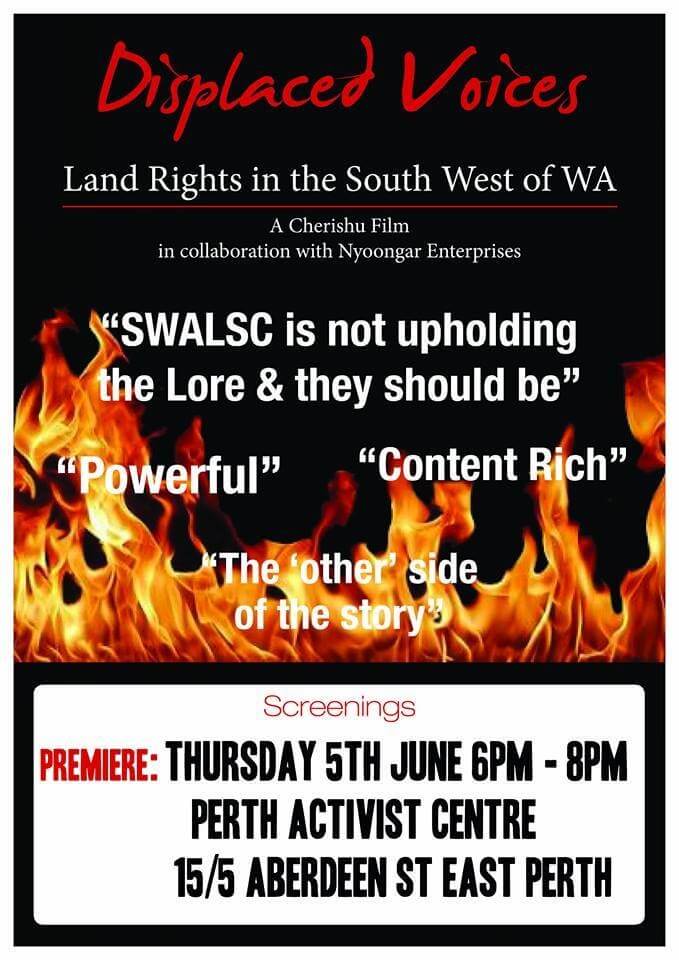
Displaced Voices is an hour long documentary film that explores all facets of a proposed Native Title deal on Noongar lands in Western Australia, bringing a wealth of opinion and perspective – and transparency – to a conversation that has been widely controlled.
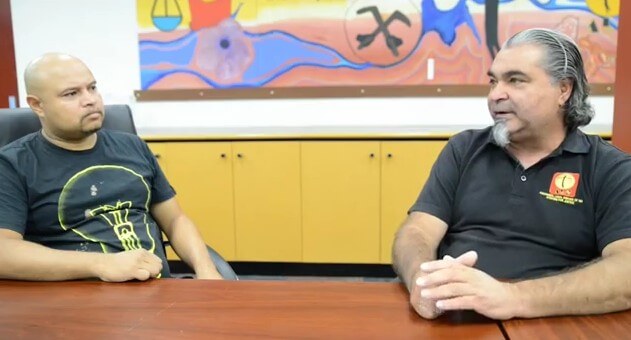
Independently (self) funded and produced by CherishU in collaboration with Nyoongar Enterprises, Displaced Voices includes interviews with the CEO of the South West Aboriginal Land & Sea Council, prominent Elders within the Noongar community and Fred Chaney (2014 Senior Australian) outlining different perspectives on the deal.
The film also highlights relevant information from the United Nations Declaration on the Rights of Indigenous, the Australian Constitution, as well as Treaties, Indigenous Land Use Agreements, and a proposed Recognition Bill that the government tabled as an incentive to accept the proposed deal.
The film further examines the governments use of division tactics as well as other possible options to the alternative native title deal for which the Noongar Community is expected to make a decision in July/August 2014.
Displaced Voices is the ONLY production that addresses the topic from any other angle. Sure to be seen as controversial, ‘Displaced Voices’ aims to help create a true dialogue around the Land Rights issue for South West Aboriginals.
Across the world right now, Indigenous peoples are facing a renewed assault on their lands, rights, and ways of life.
From extractive industries pushing deeper into ancestral territories, to governments rolling back hard-won protections,
the threat is global—and it is growing.
What makes this moment especially dangerous is how little attention it receives.
Stories like this are disappearing in real time. Mainstream media
barely covers it and the coverage is fragmented. The public is left without the context
needed to understand what is truly at stake.
That is exactly why IC Magazine exists..
For more than 20 years, IC has reported on Indigenous struggles worldwide — consistently, independently, and without compromise.
We don’t follow news cycles; we trace patterns. We don’t sensationalize; we provide context.
And when the world looks away, we stay focused.
But this work is increasingly difficult to sustain.
We refuse to lock our reporting behind a paywall. We don’t sell access through subscriptions.
And we don’t answer to advertisers. IC Magazine survives solely because readers like you choose to
support independent Indigenous journalism.
Please donate today if you can. Every contribution helps us to continue this crucial work.
Thank you,
John Ahni Schertow
Founder and Editor in Chief