Last Updated on May 22, 2026
France is moving to return the remains of six Indigenous Kalina people who died after being exhibited in a colonial-era “human zoo” in Paris more than 130 years ago, in a landmark step toward confronting one of the darkest and most dehumanizing chapters of European colonial history.
The French Senate unanimously approved legislation this week authorizing the repatriation of the remains to French Guiana, a French territory on the northeastern coast of South America.
The measure would allow the remains, held for more than a century in French museum collections, to be returned for burial in their homeland within a year.
The six were among 33 Kalina and Arawak people brought from French Guiana to Paris in 1892 and displayed at the Jardin d’Acclimatation, a popular attraction that hosted ethnographic exhibitions designed to showcase colonized peoples as exotic curiosities. Many of those exhibited were children and teenagers.
Several became ill after arriving in France, and six died. Their bodies were later exhumed and incorporated into anthropological collections for scientific study.
“We are talking about men and women, about people who were torn away from their homeland and their people and stripped of their dignity,” Senator Catherine Morin-Desailly, one of the bill’s sponsors, said during parliamentary debates.
The legislation follows years of advocacy by descendants and Indigenous organizations seeking recognition of the harm inflicted on their ancestors. Among the leading voices is Corinne Toka-Devilliers, a descendant of one of the people displayed in Paris and head of the association Moliko Alet+Po. She welcomed the Senate vote as a long-overdue acknowledgment of colonial violence and historical injustice.
The proposed repatriation comes amid broader international efforts to return Indigenous human remains and cultural belongings removed during colonial rule. France enacted legislation in 2023 creating a framework for the restitution of human remains held in public collections, although additional legislation was required in this case because French Guiana is not a foreign state but an overseas French territory.
The case has drawn renewed attention to the largely forgotten history of so-called “human zoo” exhibitions that flourished across Europe and North America from the late nineteenth century into the mid-twentieth century. Historians estimate that approximately 35,000 people from Africa, Asia, Oceania and the Americas were displayed in these ethnographic shows that promoted colonial ideologies and racial hierarchies.
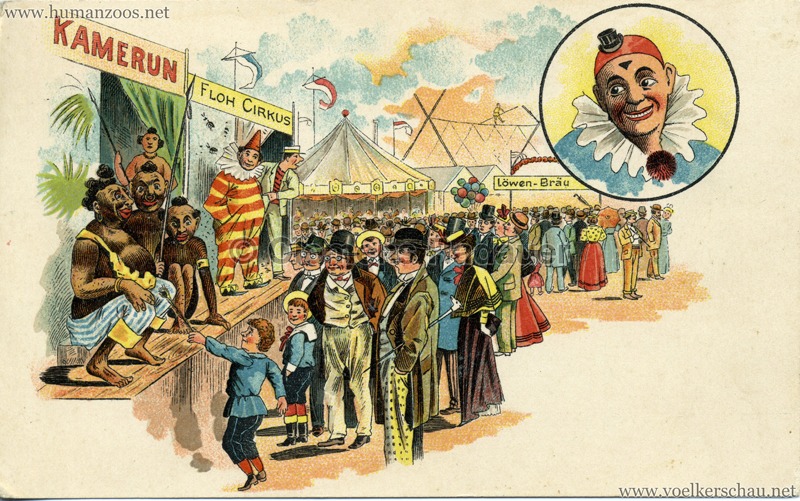
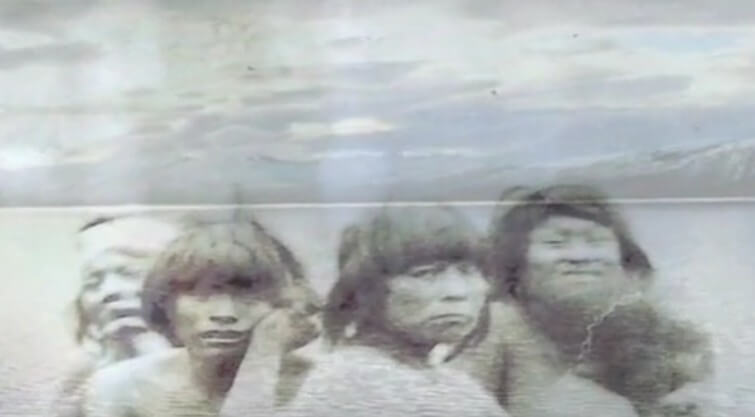
Photo from humanzoos.net
The displays were often promoted as educational and scientific, but modern scholars view them as instruments of colonial propaganda that sought to legitimize imperial conquest by portraying non-European peoples as inferior and in need of European civilization.
Anthropologists and racial theorists frequently used the exhibitions to collect measurements, photographs and specimens intended to support discredited theories of racial hierarchy.
France became one of the principal centers of the phenomenon. Beginning in the 1870s, the Jardin d’Acclimatation in Paris regularly hosted exhibitions featuring Indigenous peoples from France’s colonial possessions and other parts of the world. The Jardin d’Acclimatation is now a children’s amusement park.
But the practice was not unique to France. Human exhibitions appeared in cities including London, Hamburg, Brussels, Milan, Berlin and New York. One of the most infamous cases involved Ota Benga, a Congolese man who was displayed in 1906 at New York’s Bronx Zoo alongside primates, provoking international outrage. Historians now regard the episode as one of the clearest examples of scientific racism in the modern era.
Although criticism existed at the time, the exhibitions persisted for decades. Some continued into the 1950s, long after the horrors of Nazi racial ideology had discredited many of the pseudo-scientific assumptions that underpinned them.
The repatriation debate also highlights the role museums and scientific institutions played in collecting Indigenous human remains during the colonial era.
Throughout the nineteenth and early twentieth centuries, museums across Europe amassed thousands of skulls, skeletons and other human remains gathered from colonized territories. Many were obtained without consent and used in research intended to classify human populations according to racial categories.
Today, museums are increasingly reassessing these collections and facing demands from Indigenous communities seeking the return of their ancestors.
France’s National Museum of Natural History, which includes the Musée de l’Homme, holds one of the country’s largest collections of human remains. Recent efforts have focused on identifying individuals, documenting the origins of collections and facilitating returns where possible.
The return of the Kalina remains follows another significant restitution in 2025, when France returned the skulls of Indigenous Malagasy warriors, including one believed to belong to King Toera, more than a century after they were taken as colonial trophies.
For descendants in French Guiana, however, the issue extends beyond museum policy. It concerns restoring dignity to people who were reduced to exhibits in life and specimens in death.
“Naming them restores their humanity,” Toka-Devilliers told French media after the Senate vote. “It restores an identity to people who were kept in a museum for more than 130 years.”
If approved by France’s lower house of parliament, the legislation would finally allow the six Kalina individuals to return home, offering a measure of justice more than a century after their deaths.
Across the world right now, Indigenous peoples are facing a renewed assault on their lands, rights, and ways of life.
From extractive industries pushing deeper into ancestral territories, to governments rolling back hard-won protections,
the threat is global—and it is growing.
What makes this moment especially dangerous is how little attention it receives.
Stories like this are disappearing in real time. Mainstream media
barely covers it and the coverage is fragmented. The public is left without the context
needed to understand what is truly at stake.
That is exactly why IC Magazine exists..
For more than 20 years, IC has reported on Indigenous struggles worldwide — consistently, independently, and without compromise.
We don’t follow news cycles; we trace patterns. We don’t sensationalize; we provide context.
And when the world looks away, we stay focused.
But this work is increasingly difficult to sustain.
We refuse to lock our reporting behind a paywall. We don’t sell access through subscriptions.
And we don’t answer to advertisers. IC Magazine survives solely because readers like you choose to
support independent Indigenous journalism.
Please donate today if you can. Every contribution helps us to continue this crucial work.
Thank you,
John Ahni Schertow
Founder and Editor in Chief