
Last Updated on April 10, 2025
“Food security exists when all people, at all times, have physical and economic access to sufficient, safe and nutritious food that meets their dietary needs and food preferences for an active and healthy life.”
In this video, Indigenous people in northern Manitoba talk about their struggle for food security and the barriers of extremely high food prices (in some communities, a 4L jug of Milk costs $14.99), poverty and either a lack of healthy choices in stores or any store in their community.
This—coupled with the isolation of remote communities, as well as winter roads and the overall decline in the consumption of traditional food–has led to some of the highest rates of food insecurity in Canada. According to a recent survey of 534 households by the University of Manitoba, food insecurity stands at 75 per cent in Northern Manitoba communities, compared to 9.2 per cent for the rest of Canada.
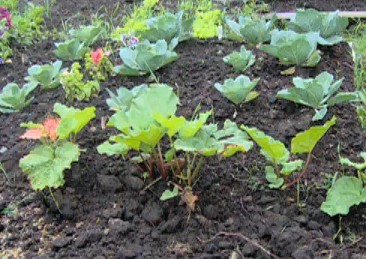
Despite these challenges, just as much because of them, more and more community members are turning to themselves, planting their own gardens, building their own greenhouses, teaching their children and families traditional ways and gardening, involving elders and sharing the food through traditional community freezers and community dinners.
In growing this food, they are growing hope, restoring the relationship to the land and renewing a memory that many of us have forgotten: no one has to suffer, no one has to go without. We have everything we need as long as we work together.
Growing Hope in Northern Manitoba was created by students and a professor at the University of Manitoba’s Natural Resources Institute.
Across the world right now, Indigenous peoples are facing a renewed assault on their lands, rights, and ways of life.
From extractive industries pushing deeper into ancestral territories, to governments rolling back hard-won protections,
the threat is global—and it is growing.
What makes this moment especially dangerous is how little attention it receives.
Stories like this are disappearing in real time. Mainstream media
barely covers it and the coverage is fragmented. The public is left without the context
needed to understand what is truly at stake.
That is exactly why IC Magazine exists..
For more than 20 years, IC has reported on Indigenous struggles worldwide — consistently, independently, and without compromise.
We don’t follow news cycles; we trace patterns. We don’t sensationalize; we provide context.
And when the world looks away, we stay focused.
But this work is increasingly difficult to sustain.
We refuse to lock our reporting behind a paywall. We don’t sell access through subscriptions.
And we don’t answer to advertisers. IC Magazine survives solely because readers like you choose to
support independent Indigenous journalism.
Please donate today if you can. Every contribution helps us to continue this crucial work.
Thank you,
John Ahni Schertow
Founder and Editor in Chief