Last Updated on May 18, 2026
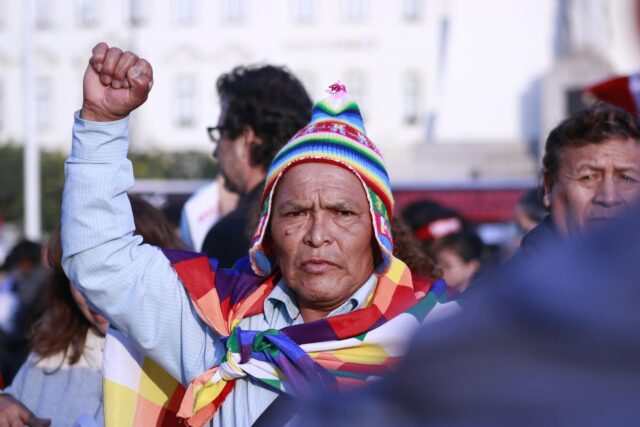
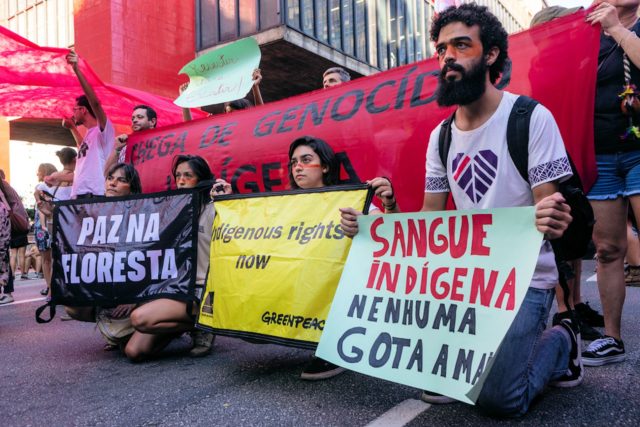
Indigenous and human rights defenders opposing corporate abuses faced a record number of attacks in 2025, with Indigenous Peoples disproportionately targeted despite making up only a small fraction of the global population, according to a new report by the Business & Human Rights Resource Centre (BHRC).
The report, titled “Navigating a Global Crossroads: Human Rights Defenders and Business in 2025”, documented 790 attacks against people raising concerns about business-related harms across 80 countries last year — an average of more than two attacks per day. The organization said it is the highest annual total it has recorded since it began tracking such cases in 2020.
Indigenous Peoples accounted for nearly one-third of all attacks, even though they represent roughly 6% of the world’s population, the report found.
The findings underscore what rights advocates describe as a deepening global conflict between extractive industries, large-scale development projects and Indigenous communities defending their territories.
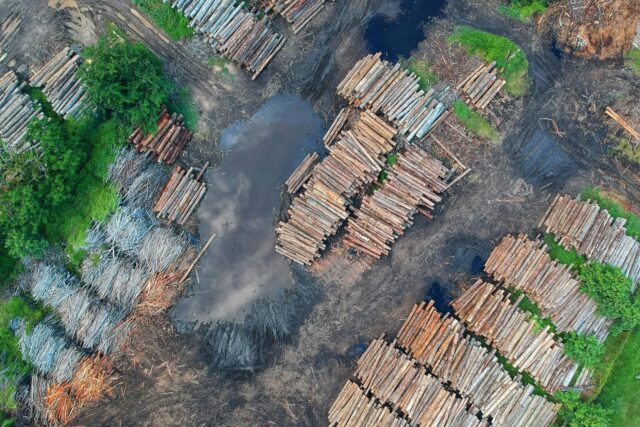
Most of the attacks were linked to climate, land and environmental defense efforts, which made up 75% of documented cases. Mining, fossil fuel extraction, agribusiness and renewable energy projects were among the sectors most frequently associated with abuses.
Latin America and the Caribbean accounted for 42% of all attacks, followed by Asia and the Pacific at 30%, according to the report.
The BHRC said defenders increasingly face criminalization, surveillance, intimidation, arbitrary detention and violence for opposing projects tied to corporate interests or state-backed economic development.
“Across the world, governments are increasingly using security-driven narratives to justify restrictions on civic space and delegitimise dissent. Community leaders, environmental defenders, trade unionists, journalists and lawyers who challenge harmful business practices are frequently portrayed as “extremists”, “terrorists”, against national interest or threats to stability”, said the BHRC.
“This framing enables authorities to deploy counterterrorism laws, surveillance, militarised policing and criminal prosecutions against individuals and groups raising legitimate concerns, particularly in sectors considered economically or strategically important. As a result, defenders opposing harmful corporate activity face growing risks of intimidation, criminalisation and violence, compromising the security of their families, communities and societies.”
The BHRC goes on to observe that “security narratives” are increasingly “being used to fast-track extractive projects” in the global push for transition minerals used in renewable energy technologies.
Indigenous communities are often on these frontlines because many industrial projects overlap with Indigenous territories that are rich in these key resources.
The BHRC warned that without stronger protections, the transition to a low-carbon economy risks reproducing the same patterns of dispossession and violence long associated with extractive industries.
“Urgent action is essential to address the climate crisis, but the transition will not be fast or sustainable if it violates rights in the process,” the report states.
The organization called on governments to strengthen legal protections for defenders, ensure companies conduct meaningful human rights due diligence and guarantee Indigenous communities the right to participate in decisions affecting their territories.
Across the world right now, Indigenous peoples are facing a renewed assault on their lands, rights, and ways of life.
From extractive industries pushing deeper into ancestral territories, to governments rolling back hard-won protections,
the threat is global—and it is growing.
What makes this moment especially dangerous is how little attention it receives.
Stories like this are disappearing in real time. Mainstream media
barely covers it and the coverage is fragmented. The public is left without the context
needed to understand what is truly at stake.
That is exactly why IC Magazine exists..
For more than 20 years, IC has reported on Indigenous struggles worldwide — consistently, independently, and without compromise.
We don’t follow news cycles; we trace patterns. We don’t sensationalize; we provide context.
And when the world looks away, we stay focused.
But this work is increasingly difficult to sustain.
We refuse to lock our reporting behind a paywall. We don’t sell access through subscriptions.
And we don’t answer to advertisers. IC Magazine survives solely because readers like you choose to
support independent Indigenous journalism.
Please donate today if you can. Every contribution helps us to continue this crucial work.
Thank you,
John Ahni Schertow
Founder and Editor in Chief