Last Updated on November 26, 2025
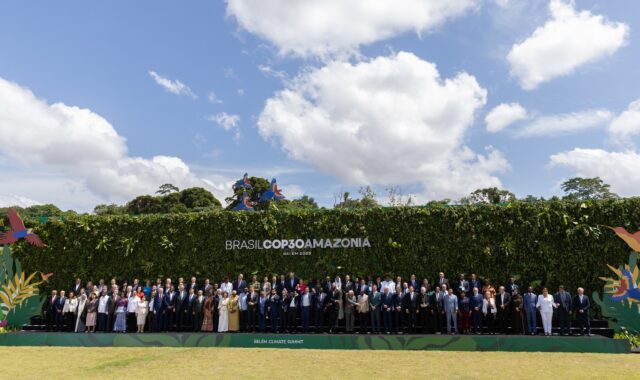
Both on the ground and across the globe, COP30 in Belém attracted a flurry of labels. Some dubbed it the “COP of implementation,” underscoring the long-delayed need to actually carry out the commitments made at earlier climate summits. Others have framed it as the “COP of truth,” a nod to the uncomfortable reckoning with how far short previous pledges have fallen. But the description gaining the most traction is the idea that this was the “Indigenous Peoples’ COP” because it hosted the largest gathering of Indigenous delegates in the summit’s history. Ultimately, however, this label risks obscuring more than it reveals.
Since the establishment of the UN Framework Convention on Climate Change (UNFCCC) in 1994, the annual congress, or meeting, of its parties (COP) has succeeded mostly in keeping the world on the edge of its seat until hold-out parties finally concede in the last minute of the conference, while delivering agreements that have so far failed to meaningfully curb global greenhouse gas emissions. Yet the annual COP is widely considered the leading global climate governance mechanism, where the planet must rely on the state-centered and non-binding United Nations system to hold not only fossil fuel suppliers and consumers accountable, but also multi-national corporations, who have a vested stake in ensuring the failure of such talks.
Critics would be correct in saying that the COPs are designed to fail. After all, since their establishment, no formal rules of procedure have been adopted by the parties. This means that country delegations can obstruct and delay talks as they please, that delegation sizes can be so large that they make COPs unmanageable (i.e. mega-COPs) and unfair for smaller and poorer states with smaller delegations, and that COP agreements have no mandate to effectively address climate mitigation measures. The agreement that we are seeing come out of Belém reinforces the opinions of COP critics than those faithful to the process of these negotiations.
Similarly noted when the 2015 Paris Agreement was signed, Indigenous peoples remain sidelined by the United Nations system and will likely continue to be so until an equitable protocol is adopted by consensus of UNFCCC parties. Despite maintaining instructive and sustainable ways of life that continue to protect the majority of the planet’s remaining biodiversity, Indigenous peoples ultimately retain no formal role in negotiations over the outcome agreements. Some might point to the fact that mentions of Indigenous peoples have increased within recent years and especially during COP30. However, within the Blue Zone – the official space of COPs where negotiations take place – Indigenous peoples are reduced to being a mere stakeholder group, having to lobby alongside not only fossil fuel and mega green growth industrialists, but also dozens of other social, economic, political groups looking to influence the process in some way.
This is the Conference of the Perpetrators, representing 1,600 fossil fuel lobbyists who have been given admission at this COP30. Tom Goldtooth
On the ground, the frustration of Indigenous peoples in Belém was palpable. As Tom Goldtooth from Indigenous Environmental Network remarked,
This is the Conference of the Perpetrators, representing 1,600 fossil fuel lobbyists who have been given admission at this COP30. It is unethical to give access to these big polluters that continue a road of ecocide, terracide, and genocide against the rights of Mother Earth, Father Sky, nature and humanity. It is immoral to call this “the Indigenous Peoples’ COP” when local Indigenous peoples are forced to lift up their voices outside the gates of the COP to gain entry, when the fossil fuel lobbyists can waltz right in with no struggle.
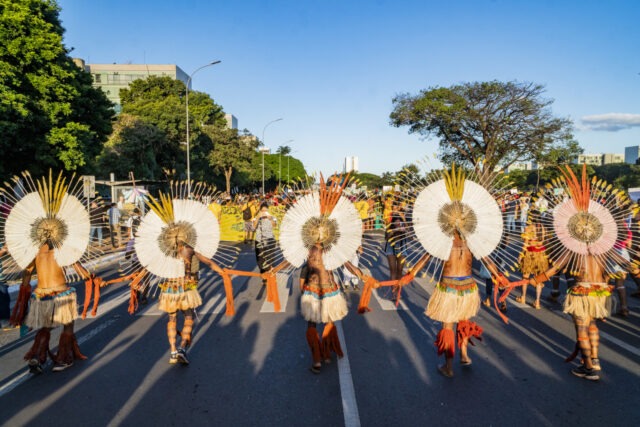
The peaceful storming of the Blue Zone by Indigenous Munduruku protestors on 14 November was something previous COPs had not witnessed. Indigenous peoples momentarily disrupted the COP, not to collapse or obstruct negotiations, but to highlight the plights and fights of Indigenous peoples of the Amazon as they face off against mega development projects and continued attacks by big and small agro-businesses on their bodies and lands. They were further supported by a flotilla of over 5,000 Indigenous, quilombola, and traditional riverine communities who demanded protection of their lands, participation in decision-making processes, and systemic change in the nature of how energy transition was being brought forth. If anything COP30 demonstrated that Indigenous peoples, along with Afro-descendent, traditional communities and friends, are gathering in solidarity, making alliances and gaining momentum to disrupt the business as usual approach of an anarchic and exclusionary COP system.
Diana Chavez Vargas of Ecuador underlined the need for COP reform in the closing collective statement of Indigenous Peoples organisations at COP30, ‘There is no true multilateralism without the real inclusion of Indigenous peoples’. To save COPs – if they are to be saved – Indigenous peoples cannot be relegated as ‘stakeholders’ or reduced to eco-warrior tropes either. With so many Indigenous peoples already displaced from, or legally dispossessed of their lands – whether by development projects or by genocide – COP must move beyond addressing the economics of energy transition. The COP system must come to terms with and address the systemic injustice it continues to foster within its halls – that is if it is even capable of doing so.
As we begin another decade of this annual tradition, the relevancy of COP in addressing the transformative demands of Indigenous peoples, as well as peoples across the Global South and marginalized peoples across the Global North, must be brought into question.
Directing her word to the parties of the UNFCCC, Vargas concluded in her statement:
“Our duty to our future generations requires us to put relationships over ego, money, and power. It’s time for you to learn to do the same.”
Across the world right now, Indigenous peoples are facing a renewed assault on their lands, rights, and ways of life.
From extractive industries pushing deeper into ancestral territories, to governments rolling back hard-won protections,
the threat is global—and it is growing.
What makes this moment especially dangerous is how little attention it receives.
Stories like this are disappearing in real time. Mainstream media
barely covers it and the coverage is fragmented. The public is left without the context
needed to understand what is truly at stake.
That is exactly why IC Magazine exists..
For more than 20 years, IC has reported on Indigenous struggles worldwide — consistently, independently, and without compromise.
We don’t follow news cycles; we trace patterns. We don’t sensationalize; we provide context.
And when the world looks away, we stay focused.
But this work is increasingly difficult to sustain.
We refuse to lock our reporting behind a paywall. We don’t sell access through subscriptions.
And we don’t answer to advertisers. IC Magazine survives solely because readers like you choose to
support independent Indigenous journalism.
Please donate today if you can. Every contribution helps us to continue this crucial work.
Thank you,
John Ahni Schertow
Founder and Editor in Chief