Last Updated on June 1, 2026
An international human rights tribunal has concluded that Canada committed genocide and crimes against humanity against Indigenous Peoples through its residential school system and related colonial policies.
The preliminary findings were released Friday by the 57th session of the Permanent Peoples’ Tribunal (PPT), an independent international opinion tribunal that spent a week hearing testimony from residential school survivors, legal experts, researchers and Indigenous advocates in Montreal.
The tribunal, which focused primarily on missing Indigenous children and unmarked graves linked to Canada’s residential school system, moved beyond the language of “cultural genocide” that dominated earlier public debate in Canada, finding that evidence presented during the hearings demonstrated a pattern of conduct that constituted “genocide” under international law.
Tribunal members also concluded that Canada committed crimes against humanity through policies that included the forced removal of Indigenous children from their families, the suppression of Indigenous languages and cultures, forced sterilization, and systemic violence against Indigenous communities.
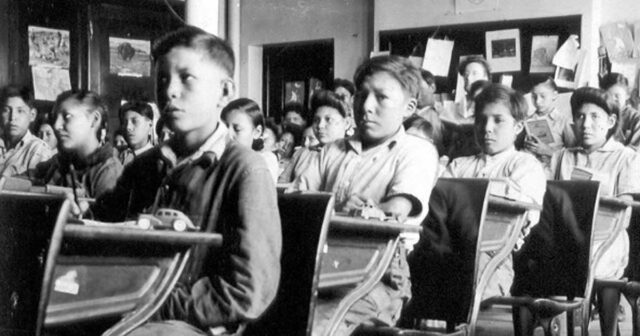
The hearings examined evidence related to the residential school system, which saw over 150,000 First Nations, Inuit and Métis children removed from their families. Survivors recounted experiences of physical abuse, sexual violence, cultural suppression and family separation, while experts testified about missing children, unmarked burial sites and barriers to obtaining government and church records.
The tribunal’s findings come nearly five years after the discoveries of potential unmarked graves at former residential school sites renewed international attention on Canada’s colonial history.
Since 2021, Indigenous communities across the country have used ground-penetrating radar and archival research to identify hundreds of potential burial locations associated with former institutions.
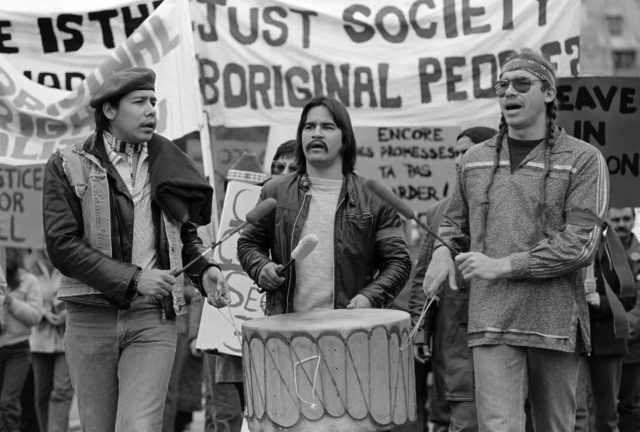
The tribunal also criticized Canada for failing to fully implement recommendations from previous inquiries, including the 2015 Truth and Reconciliation Commission and the 2019 National Inquiry into Missing and Murdered Indigenous Women and Girls. Tribunal members argued that many of the harms documented by those investigations remain unresolved and continue to affect Indigenous communities today.
The findings add to a growing body of official and scholarly assessments that have characterized aspects of Canada’s treatment of Indigenous Peoples as genocide. The Truth and Reconciliation Commission concluded in 2015 that the residential school system amounted to “cultural genocide,” while the National Inquiry into Missing and Murdered Indigenous Women and Girls later found that Indigenous women and girls have been subjected to an ongoing genocide rooted in colonial policies and state failures.
Although the Permanent Peoples’ Tribunal has no legal authority to prosecute governments or enforce its rulings, its sessions are designed to provide an international forum for communities seeking accountability when formal legal mechanisms are unavailable or ineffective. Founded in 1979, the tribunal has investigated alleged human rights violations around the world and has often sought to amplify testimony from affected communities.
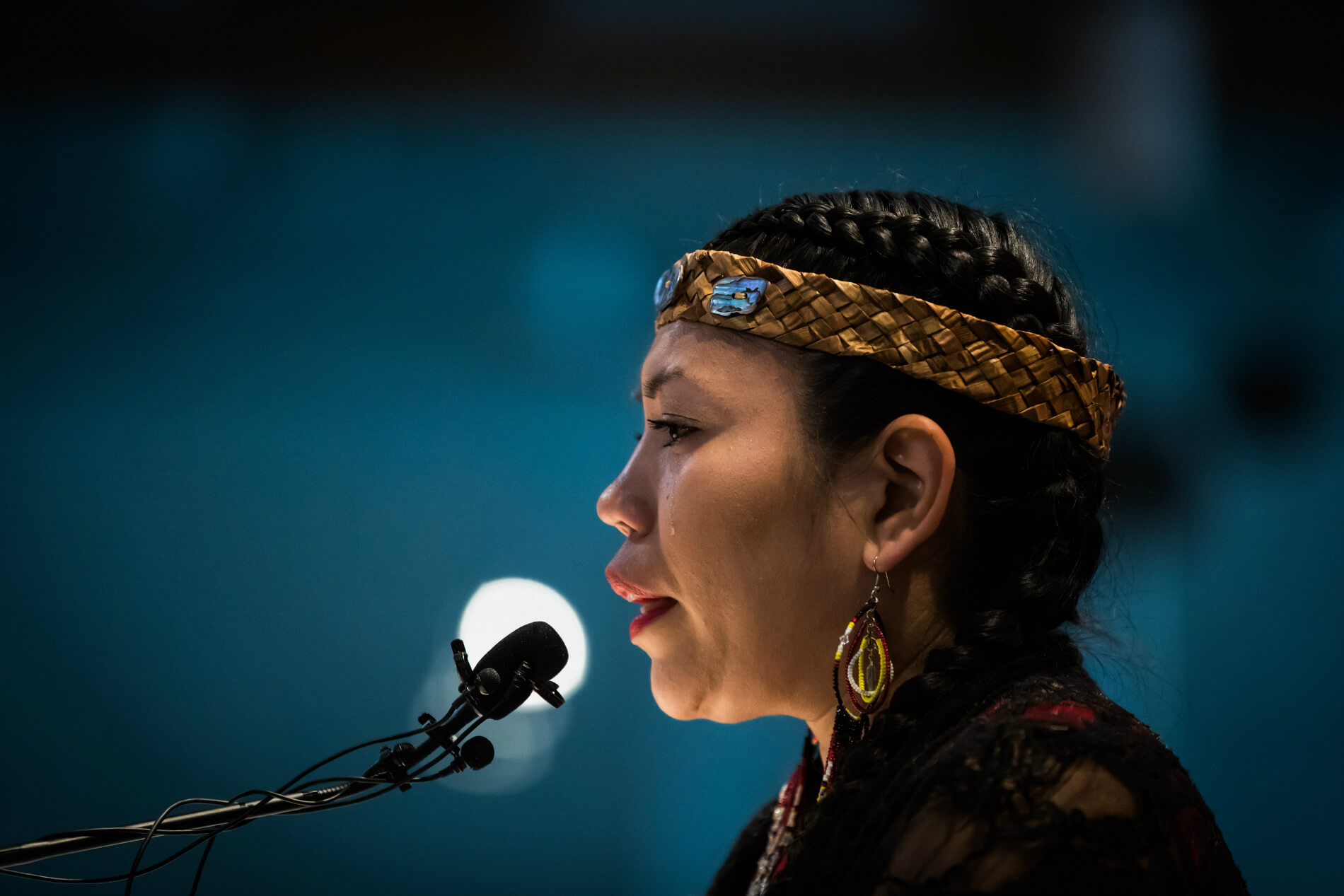
Tribunal co-chair Valmaine Toki said the evidence presented during the hearings revealed what she described as Canada’s ongoing failure to adequately address the legacy of residential schools and missing Indigenous children. She argued that responsibility for the harms remains contemporary rather than merely historical because many survivors and families continue to face obstacles in uncovering the truth about what happened to children who never returned home.
The tribunal is expected to release its full judgment and recommendations on Sept. 30, Canada’s National Day for Truth and Reconciliation.
Across the world right now, Indigenous peoples are facing a renewed assault on their lands, rights, and ways of life.
From extractive industries pushing deeper into ancestral territories, to governments rolling back hard-won protections,
the threat is global—and it is growing.
What makes this moment especially dangerous is how little attention it receives.
Stories like this are disappearing in real time. Mainstream media
barely covers it and the coverage is fragmented. The public is left without the context
needed to understand what is truly at stake.
That is exactly why IC Magazine exists..
For more than 20 years, IC has reported on Indigenous struggles worldwide — consistently, independently, and without compromise.
We don’t follow news cycles; we trace patterns. We don’t sensationalize; we provide context.
And when the world looks away, we stay focused.
But this work is increasingly difficult to sustain.
We refuse to lock our reporting behind a paywall. We don’t sell access through subscriptions.
And we don’t answer to advertisers. IC Magazine survives solely because readers like you choose to
support independent Indigenous journalism.
Please donate today if you can. Every contribution helps us to continue this crucial work.
Thank you,
John Ahni Schertow
Founder and Editor in Chief