Last Updated on November 9, 2010
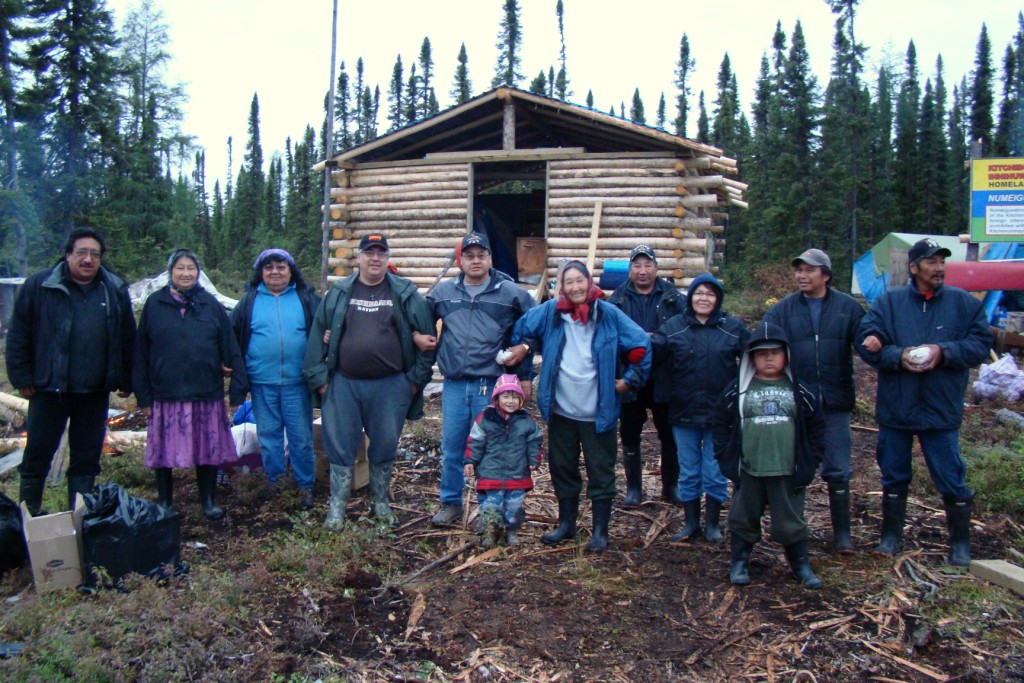
By Kate Harries, www.theglobeandmail.com – A Toronto junior mining-exploration company has suffered a stunning setback in its legal battle with a remote Ontario native band.
Platinex Inc. is suing Kitchenuhmaykoosib Inninuwug (KI, formerly Big Trout Lake First Nation) for $10-billion and sought to have band members prohibited from protesting at its drilling site.
Instead, Mr. Justice Patrick Smith of the Ontario Superior Court has found in favour of the band’s counter-injunction application and ordered Platinex not to work at the site for five months while the company and the provincial government hold talks with KI.
Judge Smith also wrote that mandating consultation by granting an injunction to KI will compel the province “to accept its fiduciary obligations and to act honourably.”
The ruling — marking the first faceoff in a constitutional challenge KI has launched against the Ontario Mining Act — is being hailed as groundbreaking for its recognition of an aboriginal world view that, he noted, is difficult for non-aboriginals to understand.
“The relationship that aboriginal peoples have with the land cannot be understated,” Judge Smith said in his ruling, released Friday. “The land is the very essence of their being. It is their very heart and soul. No amount of money can compensate for its loss.”
KI spokesman John Cutfeet said it’s clear the judge heard what his people had to say. “It’s good to know that your position toward the land is being acknowledged by a judge in a court hearing,” he said yesterday in an interview.
Residents of the fly-in community 600 kilometres northwest of Thunder Bay are excited about the decision, Mr. Cutfeet said. “It is our job to stand together to protect the Creator’s gift so that the land will continue to be there for all of us.”
Judge Smith said he accepted that Platinex faces severe financial problems and possibly bankruptcy if not granted the injunction it sought. He faulted Platinex for unilateral actions that were “disrespectful” of KI’s interests and for being the author of its own financial misfortune by understating to investors its problems gaining access to the drilling site.
The Ontario government received the judge’s harshest criticism for, he said, having abdicated its obligations by leaving consultation to the company.
“Despite repeated judicial messages delivered over the course of 16 years, the evidentiary record available in this case sadly reveals that the provincial Crown has not heard or comprehended this message and has failed in fulfilling this obligation,” Judge Smith wrote.
One unfortunate result is industrial uncertainty, he said.
Garry Clark, executive director of the Ontario Prospectors Association, welcomed the ruling. He said business is booming in Ontario’s mining industry, but a lack of clarity on consultation rules may have held up some exploration.
“We’ve needed some sort of direction from the courts,” he said.
Rick Bartolucci, the Minister of Northern Development and Mines, was not available for an interview yesterday, but in a news release he welcomed Judge Smith’s ruling as “an important step forward” and stressed that the ruling “does not impact the legitimacy of other mining claims in Ontario.”
“I would beg to differ,” said lawyer Neal Smitheman, who represented Platinex at a two-day hearing in Thunder Bay in June. “There are numerous mining companies and exploration companies that could be in a similar situation if there’s a failure to have proper consultation on lands that could be subject to a claim by first nations people.”
Trading on Platinex shares was halted yesterday at the request of the company.
KI lawyer Kate Kempton rejects Mr. Bartolucci’s view on the scope of the ruling. “It’s in the Crown’s interest to spin this as narrow. It is our take on this that . . . there could be some far-reaching precedent-setting effects out of this.”
—
© Copyright 2006 Bell Globemedia Publishing Inc
(received in email, couldn’t find source article)
Previously– May 26, Company Sues Aboriginal Community for $10 Billion
Across the world right now, Indigenous peoples are facing a renewed assault on their lands, rights, and ways of life.
From extractive industries pushing deeper into ancestral territories, to governments rolling back hard-won protections,
the threat is global—and it is growing.
What makes this moment especially dangerous is how little attention it receives.
Stories like this are disappearing in real time. Mainstream media
barely covers it and the coverage is fragmented. The public is left without the context
needed to understand what is truly at stake.
That is exactly why IC Magazine exists..
For more than 20 years, IC has reported on Indigenous struggles worldwide — consistently, independently, and without compromise.
We don’t follow news cycles; we trace patterns. We don’t sensationalize; we provide context.
And when the world looks away, we stay focused.
But this work is increasingly difficult to sustain.
We refuse to lock our reporting behind a paywall. We don’t sell access through subscriptions.
And we don’t answer to advertisers. IC Magazine survives solely because readers like you choose to
support independent Indigenous journalism.
Please donate today if you can. Every contribution helps us to continue this crucial work.
Thank you,
John Ahni Schertow
Founder and Editor in Chief