Last Updated on April 22, 2025
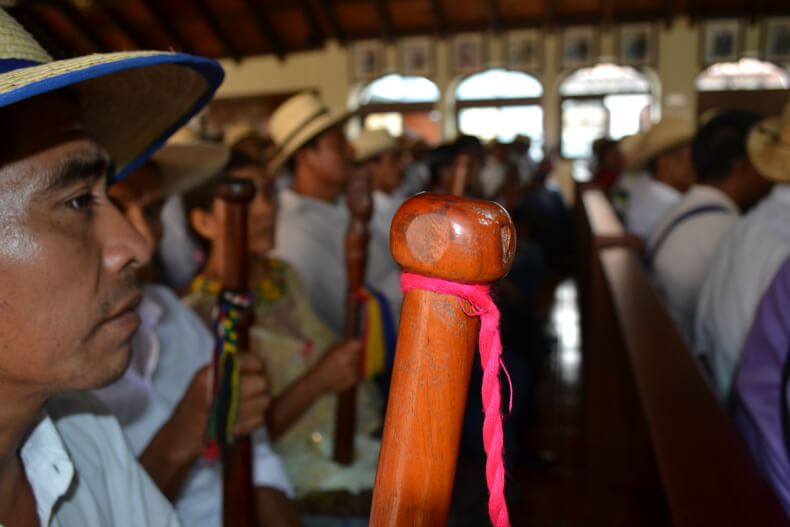
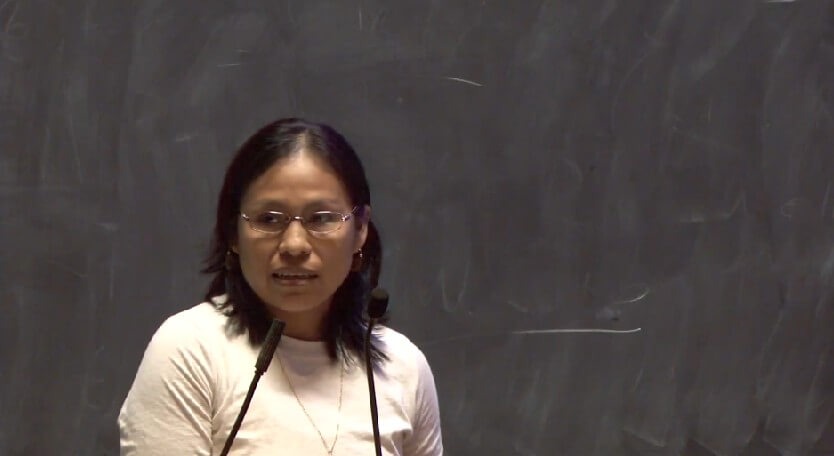
In this one-hour talk, you will hear Cristina Coc and Pablo Miss from the Maya Leaders Alliance and the Toledo Alcaldes Association, discussing their advocacy efforts for Maya land rights in Belize. Recorded Nov. 5th, 2014, at the Centre for Aboriginal Initiatives, University of Toronto in Ontario, Canada.
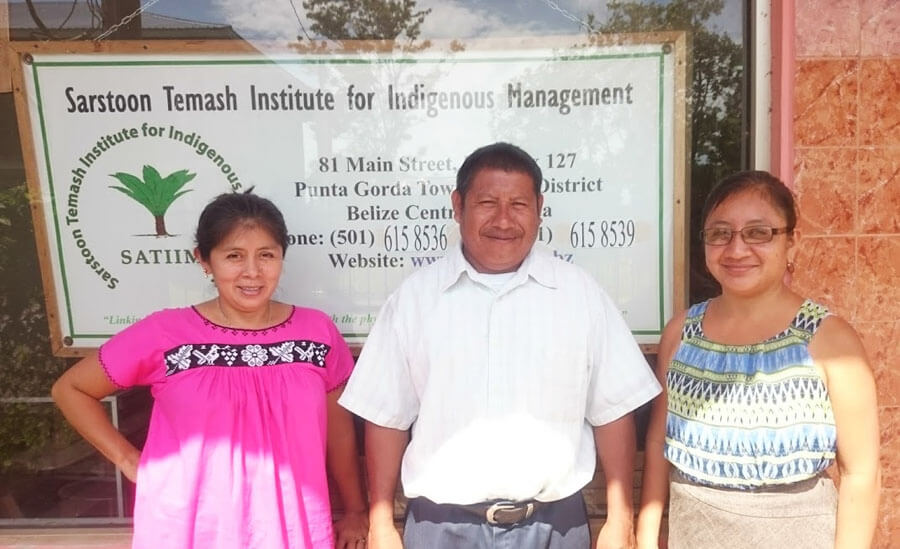
Cristina Coc serves as appointed spokesperson for the Maya Leaders Alliance and the Toledo Alcaldes Association. Coc is also co-founder of the Julian Cho Society. The JCS advocates for Maya land rights through the Belize court system and international fora, such as the United Nations. Since 2006, Coc and other Maya leaders, including Pablo Miss, have worked closely with the University of Arizona Indigenous People’s Law & Policy Program to develop strategies to test legal orders, negotiate with the Government of Belize, and build capacity among Maya communities
Pablo Miss is a Maya Q’eqchi’ from southern Belize, Central America. Over the last decade he has worked directly to support the Toledo Alcaldes Association (TAA) on a broad scope of governance related matters. The TAA is the assembly of traditional leaders and the highest authority for decision making for the 39 Maya villages of southern Belize. Since 2009 he has served as Program Coordinator for the Maya Leaders Alliance (MLA) a coalition of Maya community based organizations that advocates on behalf of the Maya people. Pablo Miss holds a bachelor’s degree in Geography from the University of Hawaii at Hilo. He is in the process of completing his Master of Arts in Indigenous Governance at the Indigenous Governance Program of the University of Victoria, Canada for which he is conducting a community governance project through the Toledo Alcaldes Association.
Across the world right now, Indigenous peoples are facing a renewed assault on their lands, rights, and ways of life.
From extractive industries pushing deeper into ancestral territories, to governments rolling back hard-won protections,
the threat is global—and it is growing.
What makes this moment especially dangerous is how little attention it receives.
Stories like this are disappearing in real time. Mainstream media
barely covers it and the coverage is fragmented. The public is left without the context
needed to understand what is truly at stake.
That is exactly why IC Magazine exists..
For more than 20 years, IC has reported on Indigenous struggles worldwide — consistently, independently, and without compromise.
We don’t follow news cycles; we trace patterns. We don’t sensationalize; we provide context.
And when the world looks away, we stay focused.
But this work is increasingly difficult to sustain.
We refuse to lock our reporting behind a paywall. We don’t sell access through subscriptions.
And we don’t answer to advertisers. IC Magazine survives solely because readers like you choose to
support independent Indigenous journalism.
Please donate today if you can. Every contribution helps us to continue this crucial work.
Thank you,
John Ahni Schertow
Founder and Editor in Chief