Last Updated on August 4, 2018
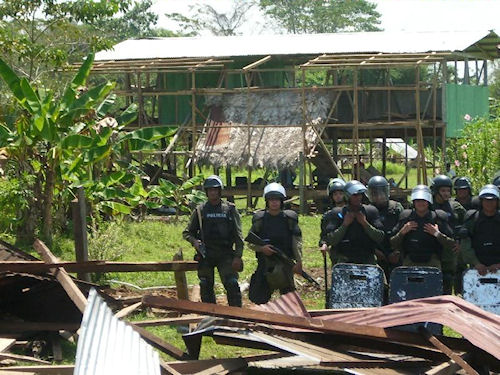
As many as 300 troops from Panama’s National Police have once again demolished a Naso village in Bocas del Toro.
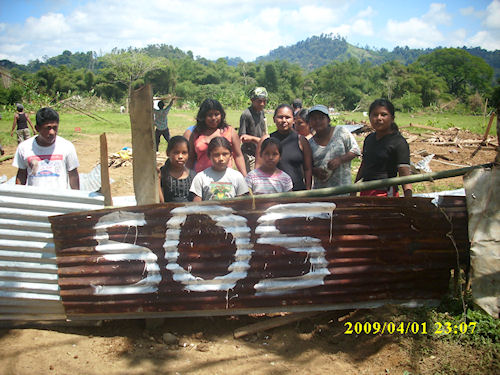
No injuries have been reported, however, some 150 adults and 65 children have been left with no shelter and limited access to food and water.
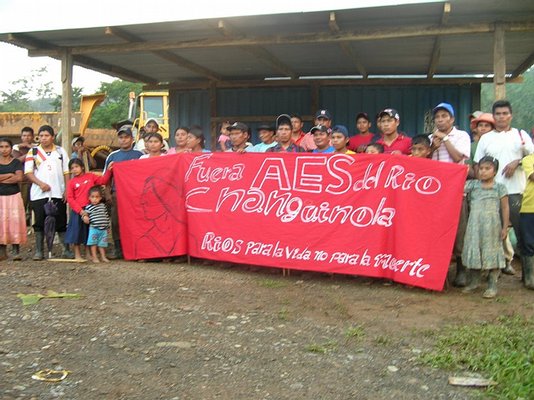
The demolition was carried out on November 19, after the Governor of Bocas del Toro tried to convince the Naso community of San San Durui to voluntarily abandon their ancestral territory. The Naso refused to accept the Government’s terms.
Once the police arrived, according to Panama Profundo, the community did their best to resist. However, they were eventually forced to give way to the police and their indiscriminate use of tear gas.
With the Naso unable to protect their village, the police allowed the Ganadera Bocas cattle company—who claims to own the community’s land—to move in with their equipment to destroy the village. This is the second time in 8 months the same village has been leveled.
On March 30, 2009, Esther Mena de Chi, the last Governor of Bocas del Toro, ordered the Naso to be cleared off their land, which they have been trying to reclaim since the 1960s.
As a result of the order, eight children were hospitalized from exposure to tear gas and some 30 homes were destroyed, along with several other buildings. The police were also ordered to arrest several Naso leaders, which they attempted to do by preventing all men, women, and children from leaving or gaining access to food or water.
Soon after this, Panama’s Ombudsman pointed out that the police committed an “abuse of power” and failed to guarantee the Naso “due process”.
The same is true for last week’s eviction, even though, this time, the Ombudsman has refused to hear the Naso’s complaints.
According to the Naso, the police did not have a legal eviction order. Instead, they were acting solely on the word of Governor Becker and Justice Minister José Raúl Mulino, who warned the Naso on October 27 that an eviction would no longer be delayed by ongoing court proceedings.
With few other options, the Naso are currently preparing to file a complaint with the Inter-American Commission of Human Rights (IACHR), who has acted responsibly toward the Naso and the Ngobe in the past.
PHOTO: LA PRENSA/Pedro Rodríguez
To Support the Naso community of San San Drui and other threatened communities, please sign this petition urging the Panamanian Government to safeguard their human rights.
Across the world right now, Indigenous peoples are facing a renewed assault on their lands, rights, and ways of life.
From extractive industries pushing deeper into ancestral territories, to governments rolling back hard-won protections,
the threat is global—and it is growing.
What makes this moment especially dangerous is how little attention it receives.
Stories like this are disappearing in real time. Mainstream media
barely covers it and the coverage is fragmented. The public is left without the context
needed to understand what is truly at stake.
That is exactly why IC Magazine exists..
For more than 20 years, IC has reported on Indigenous struggles worldwide — consistently, independently, and without compromise.
We don’t follow news cycles; we trace patterns. We don’t sensationalize; we provide context.
And when the world looks away, we stay focused.
But this work is increasingly difficult to sustain.
We refuse to lock our reporting behind a paywall. We don’t sell access through subscriptions.
And we don’t answer to advertisers. IC Magazine survives solely because readers like you choose to
support independent Indigenous journalism.
Please donate today if you can. Every contribution helps us to continue this crucial work.
Thank you,
John Ahni Schertow
Founder and Editor in Chief