
Last Updated on October 14, 2026
Five members of a Garífuna rights organization are facing criminal charges after a forced eviction in northern Honduras, amid growing opposition to a new law that critics say threatens ancestral land rights and strengthens corporate control over territory.
The five members of the Black Fraternal Organization of Honduras (OFRANEH) were arrested in early July during an eviction in San Juan, a Garífuna community on the country’s Caribbean coast. Although they have been released, they face charges of aggravated usurpation for defending their ancestral territory.
The arrests follow the passage in June of the Law to Strengthen and Protect the Agricultural Sector, Energy Projects, Tourism, Livestock and Small-Scale Farmers, commonly known as the Agroindustrial Law. Indigenous, peasant and human rights organizations say the legislation favors large agribusinesses, restricts the prospects for agrarian reform and makes it easier to remove communities from contested land.
The law exempts land used for agroindustry from expropriation and directs police and prosecutors to take immediate action in cases of land occupation, according to an August report by Capire, a grassroots feminist media organization.
Critics warn that the legislation could deepen longstanding land conflicts in Honduras, where Indigenous and rural communities have fought for generations to secure legal recognition of their territories.
The legislation has also raised concerns about Honduras’ obligations under international human rights law.
The Inter-American Court of Human Rights has found Honduras responsible for violating the rights of Garífuna communities, including their rights to collective property and judicial protection. Its rulings ordered the state to restore and formally recognize territories belonging to communities including San Juan, Punta Piedra and Cayos Cochinos.
Rights advocates say the new law threatens to undermine those obligations by facilitating evictions while longstanding claims to ancestral land remain unresolved.
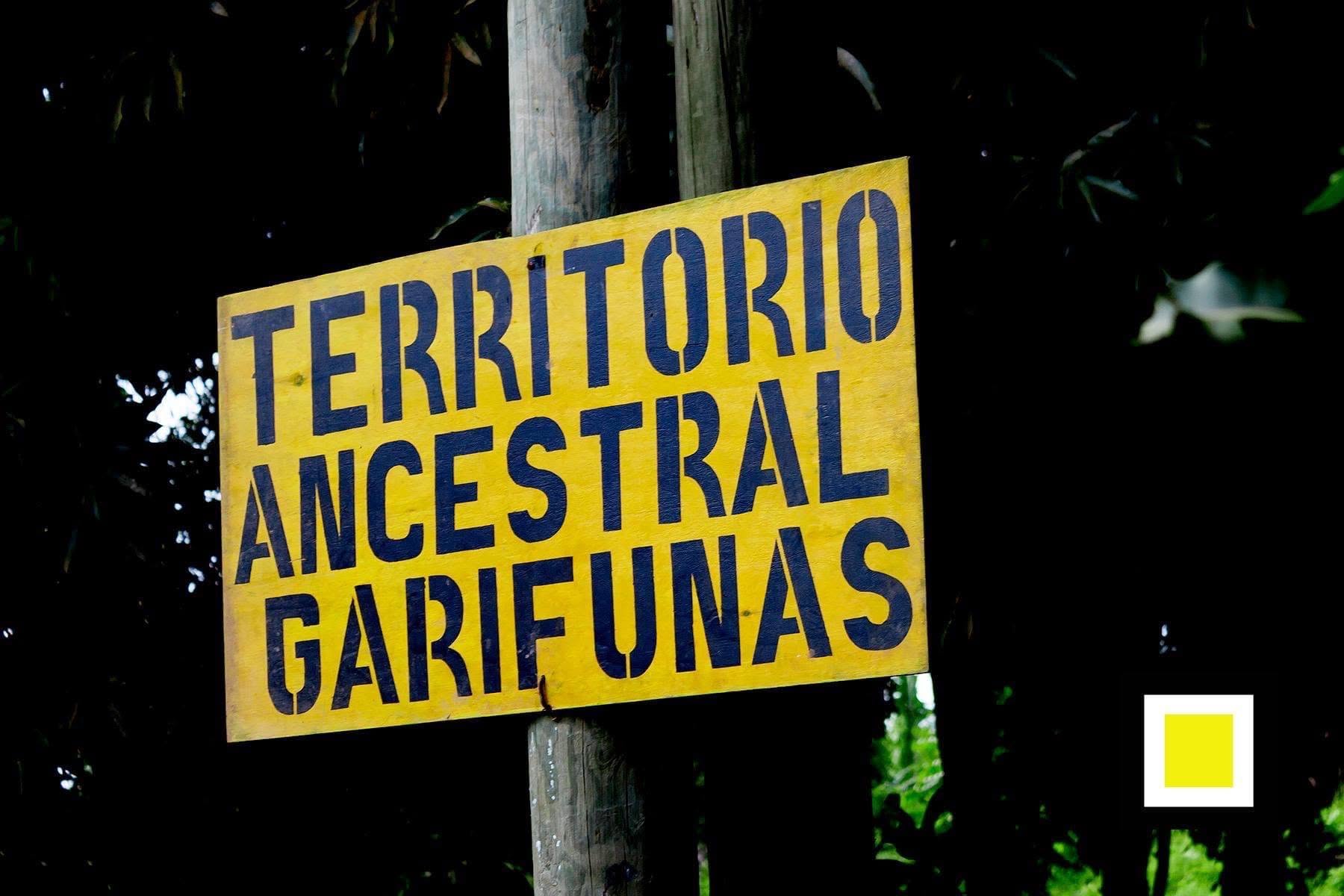
The Garífuna are an Afro-Indigenous people with deep historical ties to the Caribbean coast of Central America. Their communities have faced persistent land disputes linked to tourism development, agricultural expansion and other commercial projects.
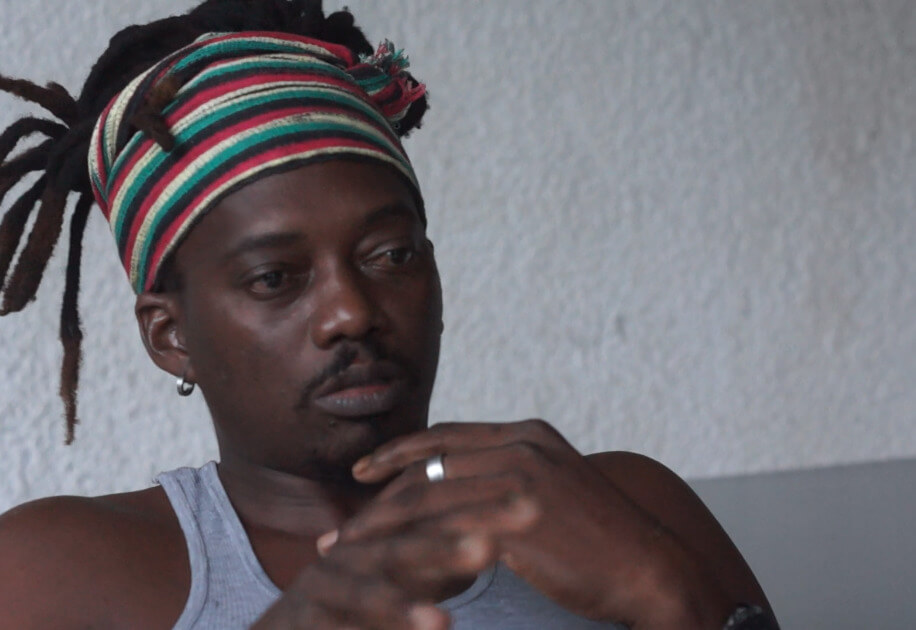
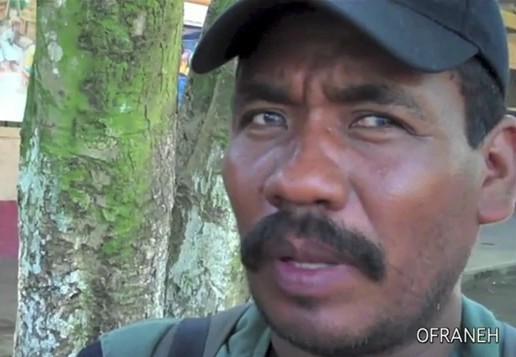
OFRANEH has long campaigned for the recognition of Garífuna territorial rights and the protection of communities facing displacement.
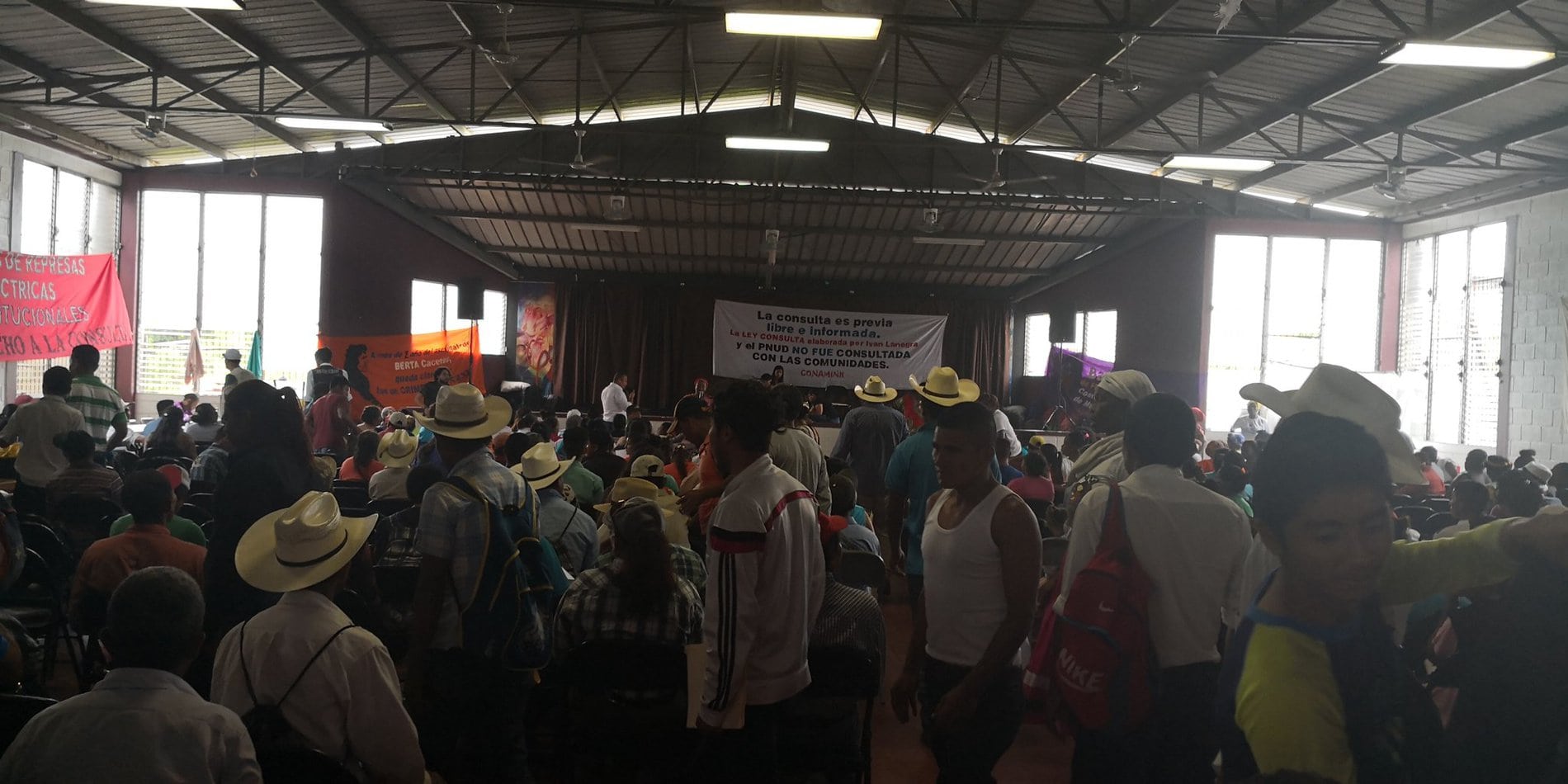
Opposition to the Agroindustrial Law extends beyond Garífuna communities. Peasant and Indigenous organizations have mobilized against the legislation, arguing that it concentrates land ownership and puts commercial interests ahead of community rights.
According to Capire, the movement has reported roughly 1,000 announced evictions under the law. The figure reflects reported eviction actions, not a confirmed count of completed removals.
On July 29, representatives of peasant and Garífuna organizations submitted more than 5,000 signatures calling for political proceedings against 17 lawmakers who supported the legislation, including National Congress President Tomás Zambrano.
OFRANEH has also established an indefinite protest camp outside the Supreme Court in Tegucigalpa, the Honduran capital. The organization is demanding that prosecutors drop the charges against the five San Juan land defenders.
Across the world right now, Indigenous peoples are facing a renewed assault on their lands, rights, and ways of life.
From extractive industries pushing deeper into ancestral territories, to governments rolling back hard-won protections,
the threat is global—and it is growing.
What makes this moment especially dangerous is how little attention it receives.
Stories like this are disappearing in real time. Mainstream media
barely covers it and the coverage is fragmented. The public is left without the context
needed to understand what is truly at stake.
That is exactly why IC Magazine exists..
For more than 20 years, IC has reported on Indigenous struggles worldwide — consistently, independently, and without compromise.
We don’t follow news cycles; we trace patterns. We don’t sensationalize; we provide context.
And when the world looks away, we stay focused.
But this work is increasingly difficult to sustain.
We refuse to lock our reporting behind a paywall. We don’t sell access through subscriptions.
And we don’t answer to advertisers. IC Magazine survives solely because readers like you choose to
support independent Indigenous journalism.
Please donate today if you can. Every contribution helps us to continue this crucial work.
Thank you,
John Ahni Schertow
Founder and Editor in Chief