
Last Updated on June 24, 2025
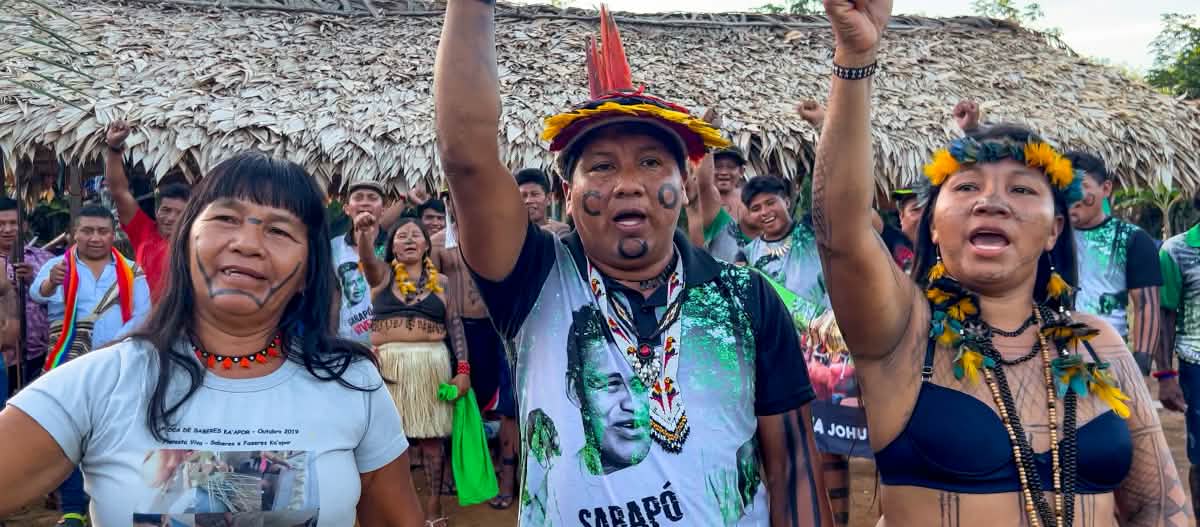
Brazil — The Ka’apor Indigenous peoples have won a federal court injunction against the U.S.-based carbon-credit company, Wildlife Works, marking a key victory in their battle against the exploitation of their ancestral lands.
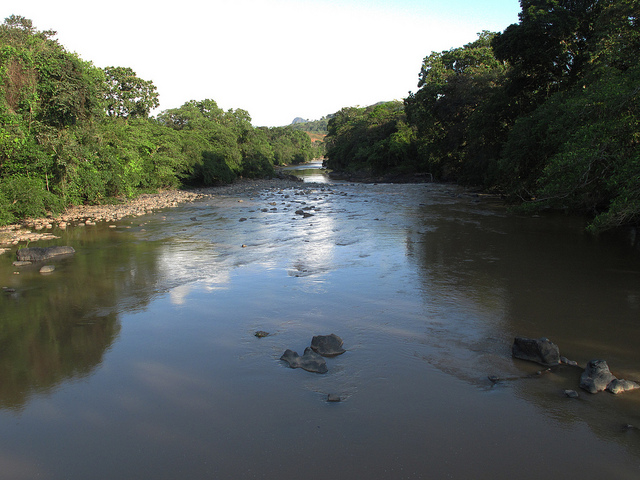
Long before conservation became a corporate trend, the Ka’apor peoples transformed their 531,000-hectare Alto Turiaçu territory into a bastion of forest preservation. Despite being surrounded by widespread deforestation, their land remains an emerald enclave that is home to several rare and endangered species like the Kaapori capuchin monkey.
In fact, the Ka’apor have achieved the lowest rates of deforestation among 232 demarcated Indigenous territories in the Brazilian Amazon. They accomplished this by drawing on ancestral traditions alongside the use of GPS, camera traps, and organized self-defense; patrolling their forests by burning logging trucks, blocking incursions, and establishing settlements near threatened borders to prevent illegal clearing.
In 2023, Wildlife Works proposed a REDD+ project that would monetize the Ka’apor’s territory by generating and selling carbon credits. However, the Ka’apor’s governing body, the Tuxa Ta Pame Indigenous Council, wasn’t having it. They vehemently opposed the plan on the basis that it would commodify their way of life.
In order to stop the project, the Ka’apor Council filed a lawsuit against Wildlife Works.
Just a few short weeks ago, on May 30, 2025, a federal judge in Maranhão handed down a decision on the case, issuing an injunction that suspends all of Wildlife Works’ activities within Alto Turiaçu territory.
The ruling cited three main reasons:
1. The violation of Article 231 of the Brazilian Federal Constitution which recognizes Indigenous peoples’ rights to their ancestral lands, and requires the federal government to prevent its sale or unauthorized use;
2. The absence of regulatory frameworks in Brazil for carbon-credit exploitation;
3. The company’s failure to secure the Ka’apor’s Free, Prior and Informed Consent (FPIC) as required by ILO Convention 169.
According to Rainforest Rescue, the project will remain suspended until the validity of the consultation process is determined in court.
But no matter the outcome of this process, the Ka’apor will surely remain steadfast in their opposition. As Itahu Ka’apor from the Indigenous Council stated, “We have always protected and defended nature. That is why we are not selling nature to the carbon market. The forest is not a commodity. This must stop.”
In addition to their legal and front-line efforts, the Ka’apor have received considerable global support via petitions by Rainforest Rescue and others, rallying over 53,000 international signatures to back their demand to keep Wildlife Works out.
Across the world right now, Indigenous peoples are facing a renewed assault on their lands, rights, and ways of life.
From extractive industries pushing deeper into ancestral territories, to governments rolling back hard-won protections,
the threat is global—and it is growing.
What makes this moment especially dangerous is how little attention it receives.
Stories like this are disappearing in real time. Mainstream media
barely covers it and the coverage is fragmented. The public is left without the context
needed to understand what is truly at stake.
That is exactly why IC Magazine exists..
For more than 20 years, IC has reported on Indigenous struggles worldwide — consistently, independently, and without compromise.
We don’t follow news cycles; we trace patterns. We don’t sensationalize; we provide context.
And when the world looks away, we stay focused.
But this work is increasingly difficult to sustain.
We refuse to lock our reporting behind a paywall. We don’t sell access through subscriptions.
And we don’t answer to advertisers. IC Magazine survives solely because readers like you choose to
support independent Indigenous journalism.
Please donate today if you can. Every contribution helps us to continue this crucial work.
Thank you,
John Ahni Schertow
Founder and Editor in Chief