
Last Updated on November 11, 2025
Nemonte Nenquimo, Hindou Oumarou Ibrahim, and Rukka Sombolinggi are Indigenous women leaders from the Amazon, the Chad–Congo Basins and Borneo-Mekong basin, respectively.
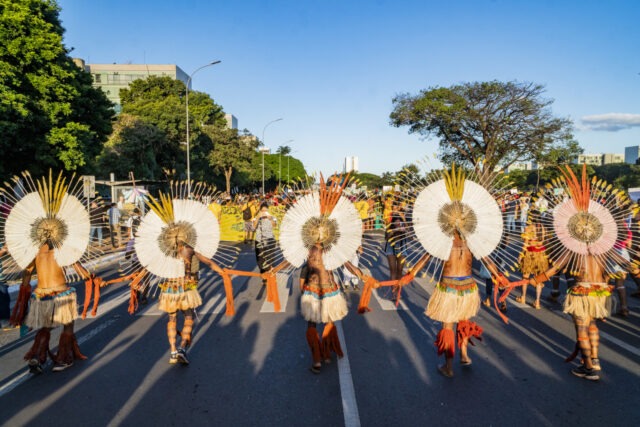
In the vast forests and ecosystems of the Amazon, the Congo Basin and Southeast Asia, the Earth is still breathing. These territories are the lungs of the planet and the hearts of our peoples, the source of rivers, rains and clean air that sustain life everywhere.
For millennia, we have cared for these living systems through our own governance, knowledge systems and laws. Our ancestors are buried beneath the trees that feed the air you breathe.
Yet in global climate debates, we are still treated as beneficiaries of decisions made far away – when, in truth, we are their rightful architects. We refuse to be a box to tick! We are leaders!
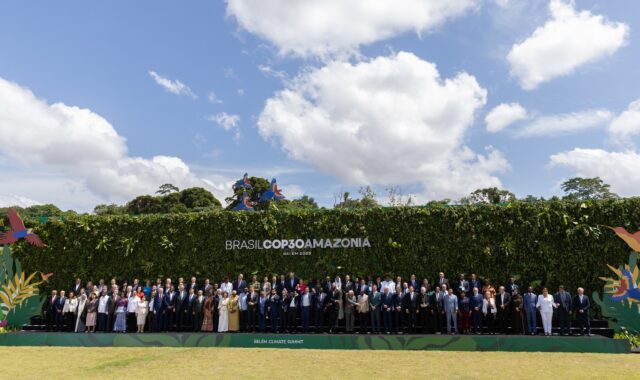
The U.N. COP30 summit in Belém, in the heart of the Amazon, could be a turning point. But the proposals we see emerging like the new Tropical Forests Forever Facility (TFFF), risk repeating a familiar mistake: making plans for us, not with us.
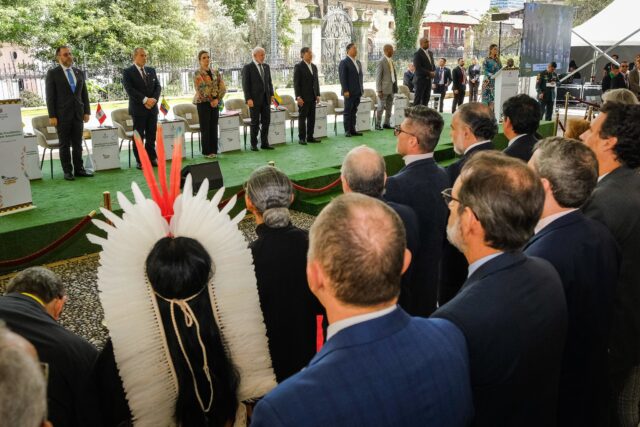
At this historic summit, Indigenous peoples were excluded from the announcement, which only included national leaders. How, then, can we be assured that our voices – the voices of those who live within and protect these forests – will truly be heard?
The truth is that our peoples are protecting our forests and ecosystems not just from chainsaws or oil drills, but from the logic of a global economic system that treats life as a line item.
Every day, decisions made in distant boardrooms, by governments, banks and investors, open the doors for the extraction of oil, gold, timber and minerals from our territories. Those decisions are pushing the Amazon, the Congo Basin and the forests of Southeast Asia to the brink of ecological collapse.
Now, as the world gathers in Belém, we see new initiatives like the TFFF designed to mobilise billions of dollars to protect what remains. We welcome this ambition, but let’s be honest: these funds exist because the same system that destroys our forests and ecosystems is now trying to pay to save them.
If governments, banks and companies are serious about keeping forests and ecosystems standing, they must first stop financing their destruction. Ending subsidies and investments that drive deforestation, from industrial agriculture to mining and fossil fuels, would do more for climate and biodiversity than any new fund could.
We need you to stop treating our territories as collateral for your growth. And the world must ensure massive direct funding reaches us, so we can restore forests that have been harmed and build economies that honour the living forests, the ecosystems and the living cultures who steward them.
We welcome the ambition to protect the world’s forests. But protection without self-determination is just another form of control and colonialism.
Across our territories, Indigenous peoples manage nearly one-third of the planet’s tropical forests, and we do so more effectively and sustainably than any other model. Yet less than 1% of international climate finance ever reaches us directly. The rest flows through layers of intermediaries that dilute both resources and responsibility.
We are not asking to be included; we are demanding what is already ours and the right to govern our territories and to decide how resources are used to sustain them.
The new facilities being designed for the “Three Basins” must not only promise transparency: they must guarantee direct access, shared governance and equitable power for Indigenous peoples. No decision about tropical forests and ecosystems should be made without the nations who live within them.
This is not charity. It is justice.
At COP30, we will not come as symbols or stewards of someone else’s plan.
Our leadership has already shown the world what real climate action looks like: defending forests and ecosystems from extraction, restoring rivers, protecting biodiversity, and maintaining the balance between humans and the living world.
We are scientists, organisers, negotiators and leaders. Yet too often, our knowledge and governance systems are ignored because they do not fit within Western frameworks of conservation or finance.
We come from three continents and three different ecosystems, but our message is one: our territories are not carbon sinks or green investments. They are living systems of culture, economy, and spirit. When they thrive, humanity thrives. When they fall, the planet’s balance collapses.
At COP30, we will not come as symbols or stewards of someone else’s plan. We will come as the peoples of the Earth’s living forests and ecosystems: political actors, landholders and leaders of solutions the world urgently needs.
Listen to us, not as voices from the margins, but as equals.
Because if the world truly wants to protect these forests, it must start by recognising who governs them.
This article was originally published in Context by the Thomson Reuters Foundation. It has been re-published at IC with permission.
Across the world right now, Indigenous peoples are facing a renewed assault on their lands, rights, and ways of life.
From extractive industries pushing deeper into ancestral territories, to governments rolling back hard-won protections,
the threat is global—and it is growing.
What makes this moment especially dangerous is how little attention it receives.
Stories like this are disappearing in real time. Mainstream media
barely covers it and the coverage is fragmented. The public is left without the context
needed to understand what is truly at stake.
That is exactly why IC Magazine exists..
For more than 20 years, IC has reported on Indigenous struggles worldwide — consistently, independently, and without compromise.
We don’t follow news cycles; we trace patterns. We don’t sensationalize; we provide context.
And when the world looks away, we stay focused.
But this work is increasingly difficult to sustain.
We refuse to lock our reporting behind a paywall. We don’t sell access through subscriptions.
And we don’t answer to advertisers. IC Magazine survives solely because readers like you choose to
support independent Indigenous journalism.
Please donate today if you can. Every contribution helps us to continue this crucial work.
Thank you,
John Ahni Schertow
Founder and Editor in Chief