Last Updated on September 16, 2025
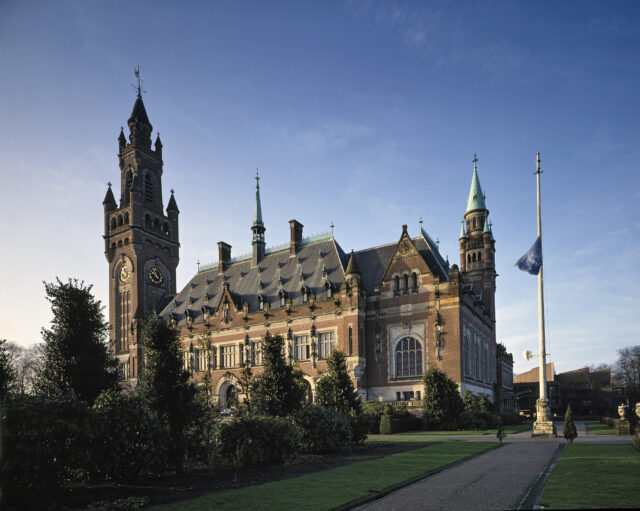
Between August 18 and 22, 2025, Bogotá hosted the Fifth Summit of Presidents of the Amazon Cooperation Treaty Organization (ACTO/OTCA). Only three heads of state—Gustavo Petro of Colombia, Luiz Inácio Lula da Silva of Brazil, and Luis Arce of Bolivia—attended in person. The other Amazonian nations, including Peru, Ecuador, Venezuela, Guyana, and Suriname, sent lower-level representatives.
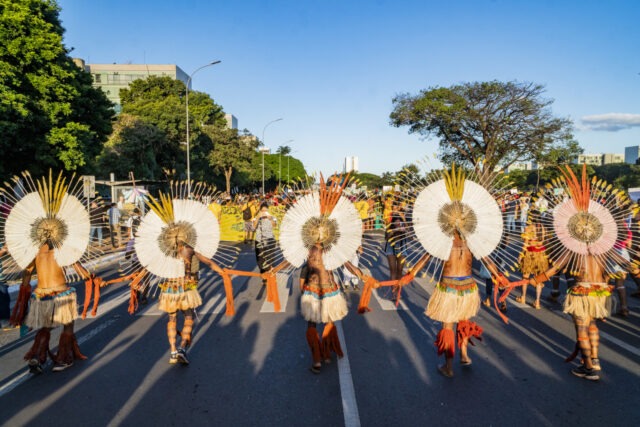
Despite the limited attendance, the Summit achieved a major milestone in the creation of the Amazon Indigenous Peoples Mechanism (MAPI), a permanent governance body that is designed to ensure Indigenous peoples have equal representation in OTCA decision-making.
MAPI is being hailed as a breakthrough because it transforms Indigenous participation into something that is institutionalized and binding.
“The challenges are many, but this alliance between governments and Indigenous organizations has all the foundations for success in reaching our shared goal: caring for our forest, our home,” said Sônia Guajajara, Brazil’s Minister of Indigenous Peoples.
Each Amazonian country will now designate both a government delegate and an Indigenous representative, with the mechanism expected to review, advise, and co-decide on issues ranging from conservation and land use to development projects and security.
For Indigenous leaders and organizations, the move is both symbolic and practical. It affirms the principle of “nothing about us without us” while offering a concrete tool to challenge policies that put ecosystems and communities at risk.
“This responds to a political commitment at the highest level and a historical debt to Amazonian Indigenous peoples, whose contribution to biodiversity protection, the fight against climate change, and preservation of traditional culture is irreplaceable and invaluable,” said Freddy Mamani, Indigenous Affairs Coordinator at OTCA.
Despite MAPI’s creation, the Bogotá Declaration drew criticism for what it left out. The final text did not mention fossil fuels, oil drilling, or gas extraction—longstanding threats to Amazonian ecosystems and communities.
This omission came despite explicit demands from more than 50 Indigenous organizations and civil society groups, who called for the Amazon to be declared a fossil fuel–free zone. Campaigners stressed that without tackling oil and gas, no governance mechanism can fully protect the forest or its peoples.
“The approval of the Amazonian Indigenous Peoples Mechanism… represents a crucial step forward… However, the authorities… missed the opportunity to lead their own energy transitions,” said Gisela Hurtado from Stand.earth.
“In Ecuador, the people voted ‘Yes’ to leaving crude in Yasuní, but the government does not comply and expansion continues, an inconsistency repeated across the region,” added Diana Chávez, an Indigenous representative from Ecuador. “The Amazon will not be saved just by halting deforestation: at COP30, states must assume clear commitments to end fossil fuels.”
Another pressing concern that hovered over the summit was the growth of organized crime in the Amazon, particularly in the porous tri-border region of Brazil, Colombia, and Peru.
As Amazon Watch shows in their recent report, In the Shadows of the State, this frontier zone has become one of the most dangerous flashpoints in the South with armed groups and drug trafficking syndicates dominating river routes—moving cocaine, illegal arms, and contraband through dense forest corridors that are nearly impossible to monitor.
Indigenous communities living in these frontier zones report escalating violence, including forced displacement, intimidation of leaders, and assassinations of environmental defenders. What’s more, these criminal activities often overlap with illegal logging, mining, and fishing operations, making them both a security and ecological threat.
“Our latest investigation with the award-winning Amazon Underworld journalism network shows that the tri-border region – where Colombia, Ecuador, and Peru meet – is now a hotspot of transnational crime,” comments Amazon Watch.
“Groups like the Comandos de la Frontera (CDF), Los Lobos, and Los Choneros in Ecuador have established what we call ‘criminal governance.’ They control river routes, jungle trails, and even influence local politics. They tax goods, extort communities, and dominate illegal economies such as coca cultivation and gold mining,” Amazon Watch continues.
“Meanwhile, rivers are poisoned with mercury from illegal gold mining, wildlife is trafficked, and vast areas of forest are destroyed. Indigenous peoples… are now under siege. Their survival, and that of the forest itself, is at grave risk.”
Governments at the OTCA Summit acknowledged the growing crisis, but offered little in the way of concrete solutions.
The summit’s mixed outcomes will place new pressure on Brazil, which is set to host COP30 later this year. Analysts note that if the Amazon states cannot present a united front against fossil fuel expansion and criminal economies, their credibility at the climate talks may be weakened.
Indigenous leaders, meanwhile, are calling for MAPI to be implemented quickly and given binding authority, not just symbolic weight. They insist that future negotiations must go beyond recognition and directly confront both extractive industries and criminal networks driving deforestation and violence.
“The next step is implementation,” comments a representative from the Coordinator of Indigenous Organizations of the Amazon Basin (COICA). “The first session must take place within the framework of COP30, in November, in Brazil. There we must arrive with a structure and the agenda that we are proposing: protecting waters, forests, environmental defenders, and youth as part of the national strategy in each country.”
Across the world right now, Indigenous peoples are facing a renewed assault on their lands, rights, and ways of life.
From extractive industries pushing deeper into ancestral territories, to governments rolling back hard-won protections,
the threat is global—and it is growing.
What makes this moment especially dangerous is how little attention it receives.
Stories like this are disappearing in real time. Mainstream media
barely covers it and the coverage is fragmented. The public is left without the context
needed to understand what is truly at stake.
That is exactly why IC Magazine exists..
For more than 20 years, IC has reported on Indigenous struggles worldwide — consistently, independently, and without compromise.
We don’t follow news cycles; we trace patterns. We don’t sensationalize; we provide context.
And when the world looks away, we stay focused.
But this work is increasingly difficult to sustain.
We refuse to lock our reporting behind a paywall. We don’t sell access through subscriptions.
And we don’t answer to advertisers. IC Magazine survives solely because readers like you choose to
support independent Indigenous journalism.
Please donate today if you can. Every contribution helps us to continue this crucial work.
Thank you,
John Ahni Schertow
Founder and Editor in Chief