Last Updated on January 17, 2026
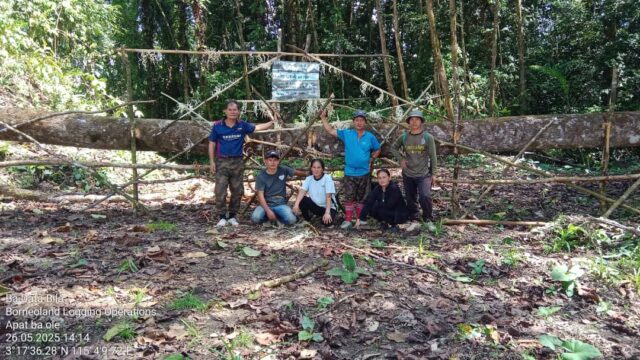
Miri, Sarawak — Logging operations by Borneoland Timber Resources (“Borneoland”) in the highly contested Upper Baram region have been temporarily halted, marking a significant victory for the Indigenous Penan community of Sawa Ali, who have steadfastly resisted the company’s encroachment onto their ancestral lands.
After months of sustained resistance, community action, and formal complaints, the Penan people can — for now — take a breather. The halt follows an intense period of pressure during the recent holiday season, when residents of Sawa Ali faced escalating intimidation and threats linked to Borneoland’s logging operations.
“This temporary halt shows that our resistance matters. We are standing firm to protect our land, our forests, and our future,” said a Penan representative from Sawa Ali. “We will not accept violence, threats, or the destruction of our ancestral territory.”
Since August 2024, Indigenous communities in the Upper Baram have been confronting Borneoland’s logging activities under a highly debated concession that threatens some of Sarawak’s last remaining primary rainforest. The license has drawn widespread concern due to its environmental impact and the lack of Free, Prior and Informed Consent (FPIC) from affected Indigenous communities.
Penan representatives have filed multiple police reports documenting verbal abuse, physical intimidation, hate speech, and defamation allegedly carried out in connection with the logging operations. According to these reports, the situation has created a climate of fear and insecurity for villagers. Alarmingly, the company’s General Manager is reported to have made hostile statements and threats directed at residents of Sawa Ali.
Despite these challenges, the Penan community has remained resolute. Through local resistance, legal action, and formal complaints to authorities, they have successfully disrupted logging operations and asserted their rights.
The people of Sawa Ali reiterate their demand that their customary lands be respected and that any activity in the area must comply fully with FPIC principles. While the current halt is temporary, it represents a clear message: Indigenous resistance is effective, and unlawful or unethical logging will not go unchallenged.
There is one remaining question that everyone is eager to know: Are the Minister of Natural Resources and Urban Development and the Sarawak Forest director who issued the timber license prepared to take responsibility should any untoward crime take place at the logging site?
Contact:
Keruan: keruan.info@gmail.com
Across the world right now, Indigenous peoples are facing a renewed assault on their lands, rights, and ways of life.
From extractive industries pushing deeper into ancestral territories, to governments rolling back hard-won protections,
the threat is global—and it is growing.
What makes this moment especially dangerous is how little attention it receives.
Stories like this are disappearing in real time. Mainstream media
barely covers it and the coverage is fragmented. The public is left without the context
needed to understand what is truly at stake.
That is exactly why IC Magazine exists..
For more than 20 years, IC has reported on Indigenous struggles worldwide — consistently, independently, and without compromise.
We don’t follow news cycles; we trace patterns. We don’t sensationalize; we provide context.
And when the world looks away, we stay focused.
But this work is increasingly difficult to sustain.
We refuse to lock our reporting behind a paywall. We don’t sell access through subscriptions.
And we don’t answer to advertisers. IC Magazine survives solely because readers like you choose to
support independent Indigenous journalism.
Please donate today if you can. Every contribution helps us to continue this crucial work.
Thank you,
John Ahni Schertow
Founder and Editor in Chief