Last Updated on March 6, 2026
Colombia’s government has launched a new consultation process with Indigenous communities to restore legal protections for the sacred “Black Line,” an ancestral territorial system maintained by the Indigenous Arhuaco, Kogi, Wiwa and Kankuamo nations.
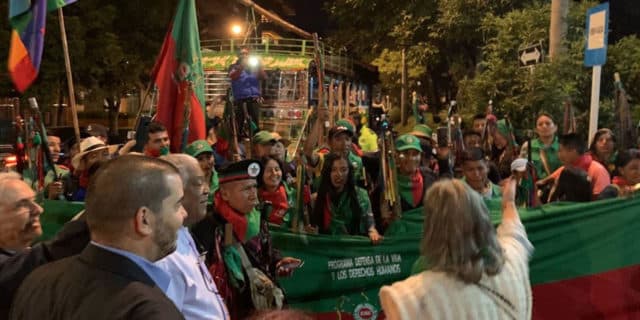
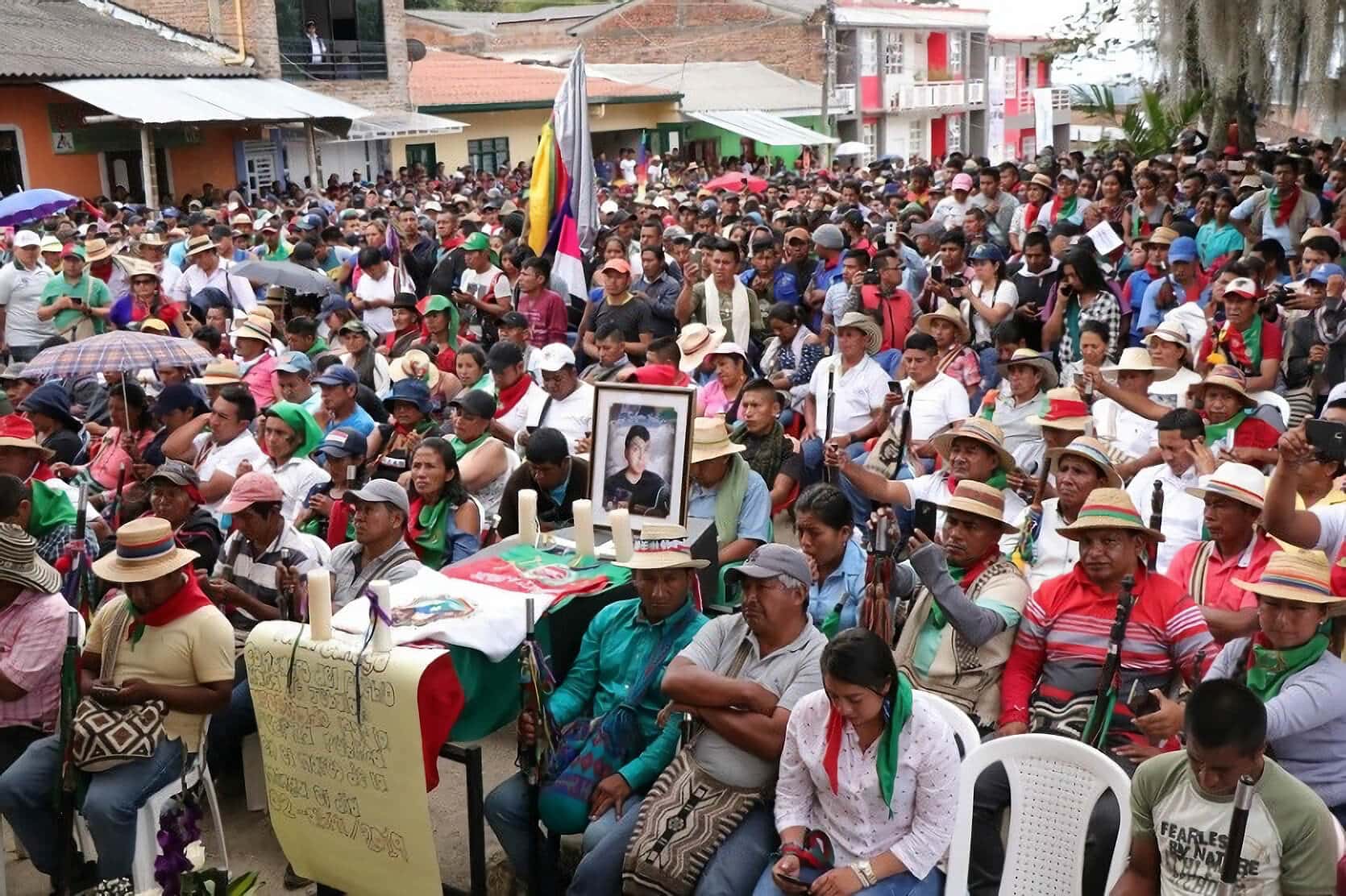
President Gustavo Petro announced the initiative late Tuesday during an interethnic assembly in the Caribbean city of Santa Marta, where Indigenous authorities, Afro-Colombian representatives and government officials gathered to discuss the future of the territory.
The consultation aims to draft a new decree recognizing the spiritual and cultural boundaries of the “Black Line.”
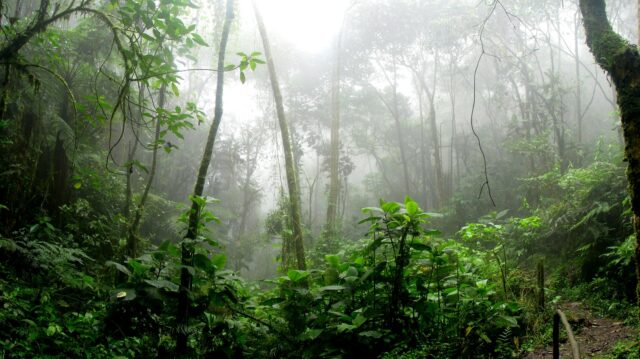
This ancestral system links hundreds of sacred locations stretching from the Caribbean coast to the high mountain peaks of the Sierra Nevada, which Indigenous authorities describe as the “heart of the world.”
The move follows a February ruling that struck down Decree 1500 of 2018, a measure that had formally recognized 348 sacred sites, creating a legal framework that was intended to protect the ecological and cultural integrity of the region.
The court annulled the decree on procedural grounds, citing issues including the absence of official cartography when it was issued as well as a lack of prior consultation with other affected communities.
Indigenous leaders warned that the court’s decision could weaken safeguards over lands increasingly targeted by tourism, infrastructure and extractive industries.
However, Petro said the new consultation process will place communities at the center of the decision-making process.
“Here a process begins in which you have the word, not the government,” Petro said. “Now corresponds a process of consultation. The consultation belongs to you. I hope it ends well and quickly so we can issue the decree again.”
“The Heart of the World must be at peace, because if the Heart of the World is not at peace, humanity will not be at peace,” Petro added. “Today humanity is not at peace – missiles fall everywhere.”
For now, the Indigenous nations who have long maintained the sacred geography of the Sierra Nevada, can only hope that the outcome of the consultation will restore formal protections to a region they say sustains the balance between people, land and the natural world.
Across the world right now, Indigenous peoples are facing a renewed assault on their lands, rights, and ways of life.
From extractive industries pushing deeper into ancestral territories, to governments rolling back hard-won protections,
the threat is global—and it is growing.
What makes this moment especially dangerous is how little attention it receives.
Stories like this are disappearing in real time. Mainstream media
barely covers it and the coverage is fragmented. The public is left without the context
needed to understand what is truly at stake.
That is exactly why IC Magazine exists..
For more than 20 years, IC has reported on Indigenous struggles worldwide — consistently, independently, and without compromise.
We don’t follow news cycles; we trace patterns. We don’t sensationalize; we provide context.
And when the world looks away, we stay focused.
But this work is increasingly difficult to sustain.
We refuse to lock our reporting behind a paywall. We don’t sell access through subscriptions.
And we don’t answer to advertisers. IC Magazine survives solely because readers like you choose to
support independent Indigenous journalism.
Please donate today if you can. Every contribution helps us to continue this crucial work.
Thank you,
John Ahni Schertow
Founder and Editor in Chief