
Last Updated on April 10, 2025
Tomkav, a Luiseno village and burial site in Northern San Diego County, is being happily desecrated by developers working for Pardee Homes (a wholly-owned subsidiary of Weyerhaeuser Corporation) and Palomar College in San Marcos, CA.
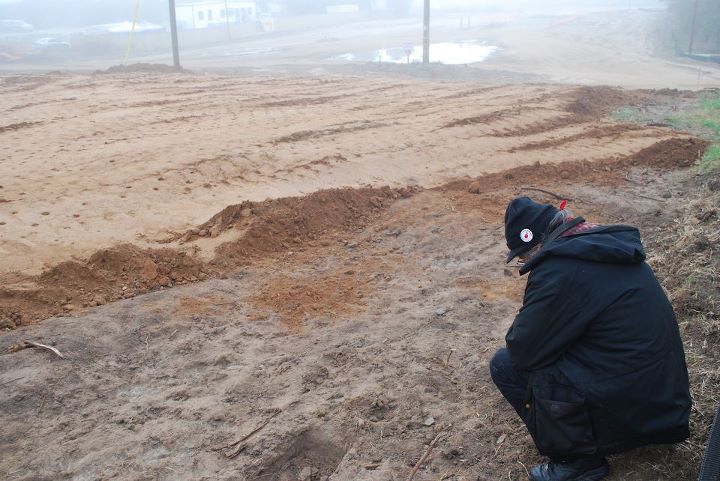
On the morning of February 23, 2012, a group of bulldozers arrived to begin work on the recently-approved Horse Ranch Creek Road, a four-lane road that would pave the way to a planned 844-home development and a brand new College satellite campus.
It wasn’t long before a group of Indigenous activists arrived on the scene; unfortunately, their efforts did little to stop the desecration that day.
To make matters worse, the operators weren’t merely trying to do their job, despite the best efforts of the activists. As the following cell-phone video reveals, the workers were enjoying it. You can see one of the operators grinning just before he turns away…
The incident speaks well to the reality of what Indigenous Peoples face in the United States, especially when it comes to preserving sacred site: As Elders watched on in horror and others ran out in front of bulldozers to try to save what they could, the workers were celebrating. They were “laughing about what was happening, high-fiving when they were finishing, and you know, making the pump motion with their hands to say whoo-hoo we did a great job,” said San Luis Rey attorney Merri Lopez-Keifer.
Meanwhile, Tom-Kav, a part of the Luiseno creation story and the site of an historic village and burial ground, is being viewed from afar as nothing more than empty land. It’s as if California state law and federal doesn’t even exist, never mind basic moral conscience.
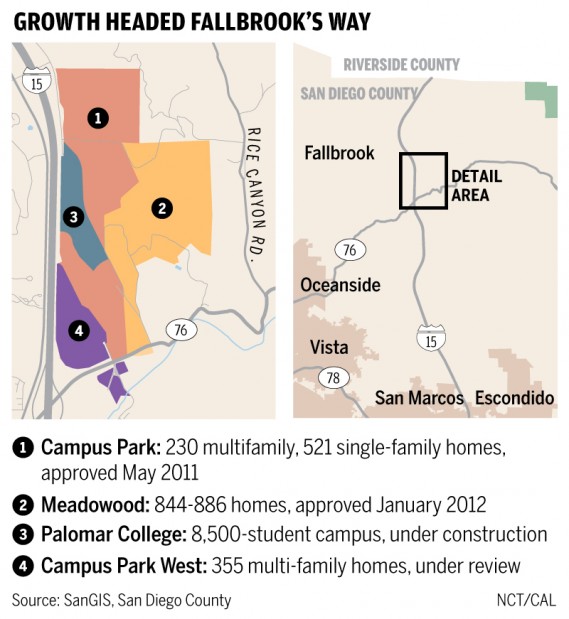 Development end-game: Meadowood, Campus Park, Palomar College and Campus Park West near Fallbrook“During the course of [work], many archeologically significant new discoveries have been made, and dozens of Luiseno burials have been unearthed, notes Save Tomkav Village. “California law requires that when new discoveries of human remains occur, construction projects must be put on hold until the materials can be analyzed, which could lead to project modifications. Pardee and Palomar College have disregarded legal protocol by carelessly proceeding with grading and construction activities, and in fact they sped up work as soon as San Luis Rey took legal action against them.”
A day after the disgusting display, the San Luis Rey Band of Mission Indians filed for an injunction to halt the road construction–which is being paid for by Palomar College.
Everybody was hopeful that justice would served, but that just wasn’t the case. On February 29, Judge Harry Elias denied the request for an injunction, giving Palomar College the right of way to continue their desecration.
The San Luis Rey Band also filed a lawsuit against the County of San Diego. A decision is expected in the coming weeks.
1. Sign a petition: Petition to Protect Tomkav Village
2. Call and email the decision-makers who are responsible for allowing the desecration to continue:
Robert P. Deegan – President
Palomar College
(760) 744-1150 Ext 2106
rdeegan@palomar.edu
San Diego County Board of Supervisors
Bill Horn, District 5:
bill.horn@sdcounty.ca.gov
619-531-5555
Pardee Homes
Tel: (858) 794-2500
info@pardeehomes.com
Jimmy Ayala, Pardee Homes
Director of Community Development
858-794-2579
jimmy.ayala@pardeehomes.com
3. Join the Save Tomkav Village facebook page.
4. If you live nearby, you’re also welcome to come out to the site and help maintain the sit-in, or bring food and encouragement to the demonstrators.
5. Offer your prayers for the land, for the ancestors who have been disturbed, and their families.
Across the world right now, Indigenous peoples are facing a renewed assault on their lands, rights, and ways of life.
From extractive industries pushing deeper into ancestral territories, to governments rolling back hard-won protections,
the threat is global—and it is growing.
What makes this moment especially dangerous is how little attention it receives.
Stories like this are disappearing in real time. Mainstream media
barely covers it and the coverage is fragmented. The public is left without the context
needed to understand what is truly at stake.
That is exactly why IC Magazine exists..
For more than 20 years, IC has reported on Indigenous struggles worldwide — consistently, independently, and without compromise.
We don’t follow news cycles; we trace patterns. We don’t sensationalize; we provide context.
And when the world looks away, we stay focused.
But this work is increasingly difficult to sustain.
We refuse to lock our reporting behind a paywall. We don’t sell access through subscriptions.
And we don’t answer to advertisers. IC Magazine survives solely because readers like you choose to
support independent Indigenous journalism.
Please donate today if you can. Every contribution helps us to continue this crucial work.
Thank you,
John Ahni Schertow
Founder and Editor in Chief