
Last Updated on July 16, 2025
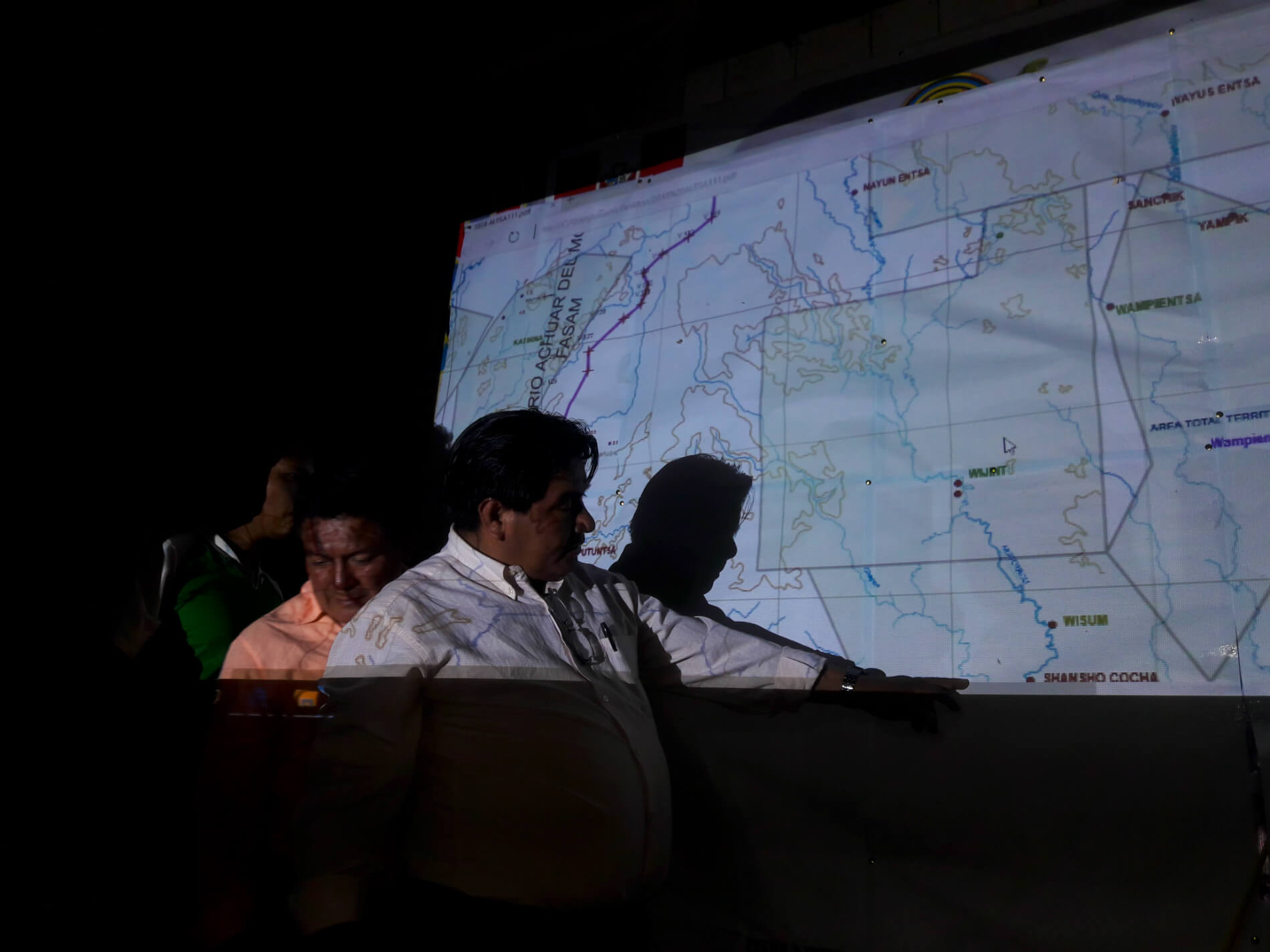
Peruvian Amazon – After more than two years of advocacy and formal coordination with various state institutions – including Peru’s executive branch, the Public Prosecutor’s Office, the National Police, and the High Commissioner for the Fight Against Illegal Mining – the Autonomous Territorial Government of the Wampís Nation secured multiple state commitments to carry out a joint operation against illegal mining in the Santiago River basin. These agreements included coordinated field presence, logistical support, and prosecutorial backing.
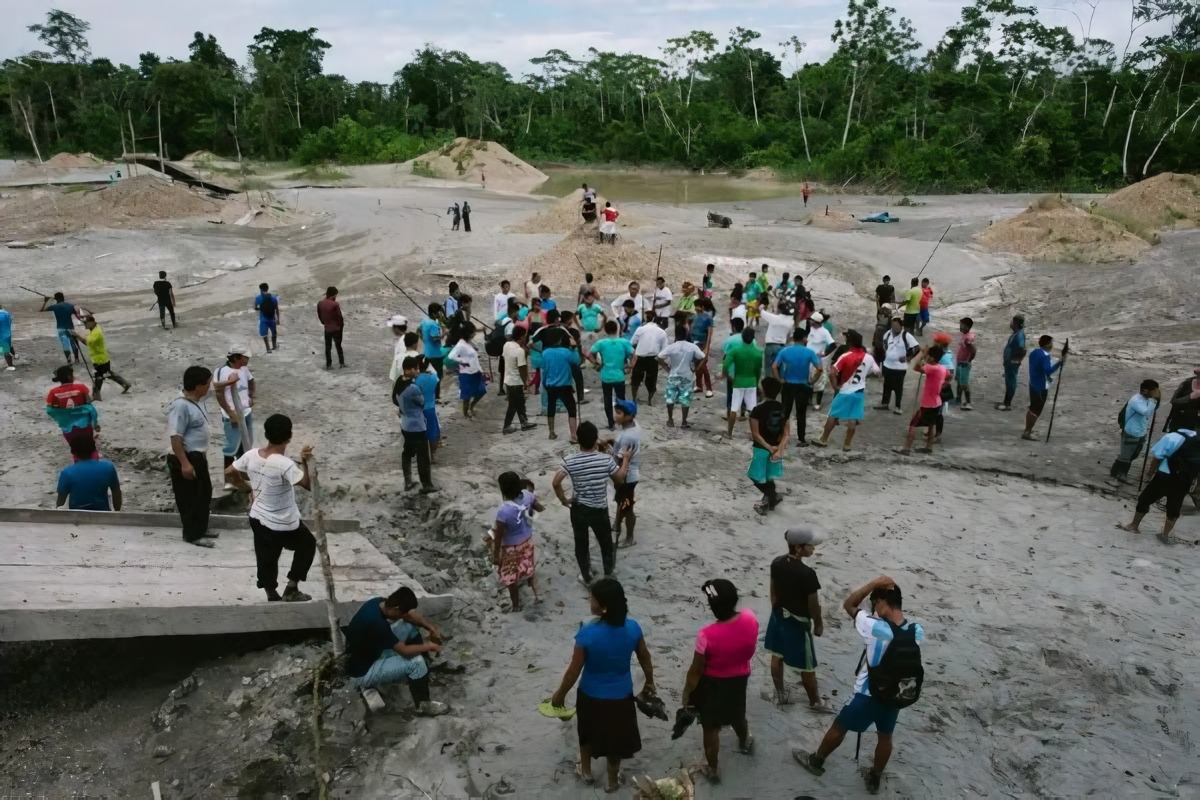
However, just days before the scheduled intervention, the Peruvian government withdrew its participation without explanation. In response to this abandonment, Wampís territorial guards launched their own autonomous monitoring operation to protect their ancestral territory and were met with gunfire while peacefully patrolling near the community of Fortaleza, in the Amazonas region.
During the first day of action, Wampís guards were ambushed by armed assailants. Fortunately, no injuries were reported. The Wampís Government reaffirmed its commitment to removing illegal mining operations from its territory, but warned that the government’s silence in the face of this violence puts the lives of Indigenous defenders at extreme risk.
Galois Yampis, Vice President of the Autonomous Territorial Government of the Wampís Nation, stated:
“We will not stand by while our rivers are poisoned and our forests destroyed. The Peruvian government made commitments it has now failed to honor, so we are acting to defend our territory and the future of our people. This is our duty as Wampís, guided by Tarimat Pujut – our vision of life in balance with nature.”
Amazon Watch, a longtime ally of the Wampís Nation, joins in denouncing the Peruvian government’s failure to protect Indigenous defenders and calls for immediate national and international action. It also urges governments of gold-importing countries – including the United States and European nations – not to allow their markets to be flooded with gold linked to violence, destruction, and illegal activity.
Raphael Hoetmer, Amazon Program Director at Amazon Watch, said:
“As criminal economies are expanding throughout the Amazon, Indigenous nations who protect their territories from violence and contamination, keep being abandoned by Amazonian governments. The Wampis have to confront illegal gold miners alone, despite the Peruvian government’s supposed offensive against organized crime promoting gold exploitation.
“The Wampís have presented clear, peaceful, and effective solutions to eradicate illegal mining, grounded in their vision of Tarimat Pujut. The Wampis not only defend their rights, but also the global climate, as criminal economies have become one of the major threats against the Amazon. It’s time to support their territorial governance and invest in the local economies that protect life in the Amazon.”
The path forward, as laid out by the Wampís Nation, is clear: eradicate illegal mining by strengthening Indigenous territorial monitoring systems, enforce real controls on illegal gold trade, and invest in sustainable development rooted in Tarimat Pujut – the Wampís vision of collective well-being and life in harmony with nature.
Across the world right now, Indigenous peoples are facing a renewed assault on their lands, rights, and ways of life.
From extractive industries pushing deeper into ancestral territories, to governments rolling back hard-won protections,
the threat is global—and it is growing.
What makes this moment especially dangerous is how little attention it receives.
Stories like this are disappearing in real time. Mainstream media
barely covers it and the coverage is fragmented. The public is left without the context
needed to understand what is truly at stake.
That is exactly why IC Magazine exists..
For more than 20 years, IC has reported on Indigenous struggles worldwide — consistently, independently, and without compromise.
We don’t follow news cycles; we trace patterns. We don’t sensationalize; we provide context.
And when the world looks away, we stay focused.
But this work is increasingly difficult to sustain.
We refuse to lock our reporting behind a paywall. We don’t sell access through subscriptions.
And we don’t answer to advertisers. IC Magazine survives solely because readers like you choose to
support independent Indigenous journalism.
Please donate today if you can. Every contribution helps us to continue this crucial work.
Thank you,
John Ahni Schertow
Founder and Editor in Chief