Last Updated on April 8, 2025
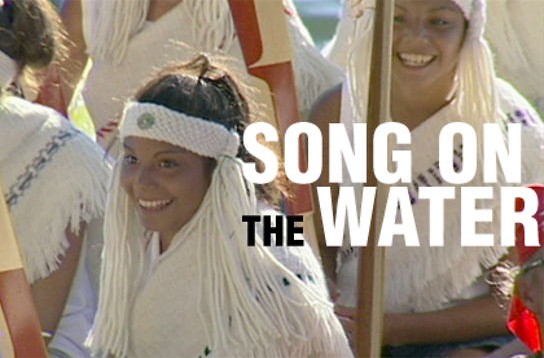
“Song on the Water” takes viewers along with 50 indigenous canoes, their crews, and communities on a modern-day voyage to a traditional potlatch.
Synopsis
In the 1960’s Native Americans in the state of Washington were forbidden from fishing in their traditional areas, off the reservations. In what became know as the “Fish Wars,” tribal fishermen were harassed and sometimes beaten by State Police. When the Boalt Decision passed in the U.S. federal courts in 1976, the federal government guaranteed the rights to fish in “usual and accustomed grounds.” But the state often denied access. Finally in a compromise, the state agreed to allow tribes to access traditional fishing grounds if they demonstrated they could access them by traditional means, ocean going canoes.
Lundahl’s award winning ethnographic documentary, “Song on the Water” (2005), takes viewers along with 50 indigenous canoes, their crews, and communities on a modern-day voyage to a traditional potlatch. Filled with beautiful photography and inspiring Coast Salish and Nuu Chah Nulth songs and cultural expressions, the one-hour film explores what the voyage means to the “pullers,” ground crews, and elders who share the waves, the traditions, and a vision of a positive future for Coast Salish youth.
Produced and Directed by Robert Lundahl. Cinematogaphy and Editing by Robert Lundahl. Location Sound, Paul Hawxhurst.
©2005 Freshwater Bay Pictures, LLC. Robert Lundahl & Associates, LLC, Robert Lundahl.
Contact: Robert Lundahl, 415.205.3481,
robert@studio-rla.com
Across the world right now, Indigenous peoples are facing a renewed assault on their lands, rights, and ways of life.
From extractive industries pushing deeper into ancestral territories, to governments rolling back hard-won protections,
the threat is global—and it is growing.
What makes this moment especially dangerous is how little attention it receives.
Stories like this are disappearing in real time. Mainstream media
barely covers it and the coverage is fragmented. The public is left without the context
needed to understand what is truly at stake.
That is exactly why IC Magazine exists..
For more than 20 years, IC has reported on Indigenous struggles worldwide — consistently, independently, and without compromise.
We don’t follow news cycles; we trace patterns. We don’t sensationalize; we provide context.
And when the world looks away, we stay focused.
But this work is increasingly difficult to sustain.
We refuse to lock our reporting behind a paywall. We don’t sell access through subscriptions.
And we don’t answer to advertisers. IC Magazine survives solely because readers like you choose to
support independent Indigenous journalism.
Please donate today if you can. Every contribution helps us to continue this crucial work.
Thank you,
John Ahni Schertow
Founder and Editor in Chief