
Last Updated on April 11, 2025
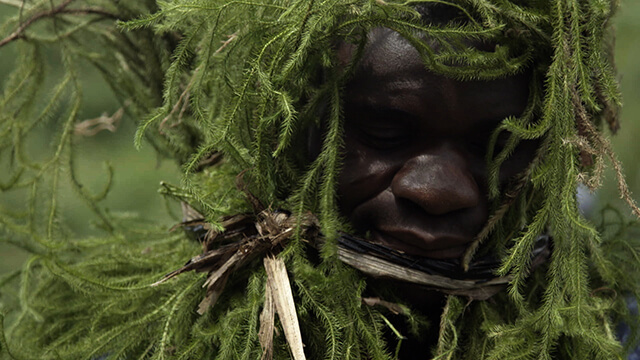
In 1992, as pressure from international conservation groups to protect the great forests of Uganda mounted, the indigenous Batwa tribe was forcefully removed from their ancestral home by the Ugandan government. One of the most ecologically diverse places on earth, the Bwindi impenetrable forest nurtured the Batwa, and in turn the tribe worshiped all that it gave them. Upon eviction, however, the Batwa received nothing in the way of compensation or support, and so fell into poverty.
Nearly 25 years later, a young Batwa named Gad Semejeri is doing everything he can to preserve his culture in the face of social oppression and substance abuse. Along with a group of young Batwa, he founded the Batwa Music Club, a band that strives to reclaim its cultural heritage by performing traditional songs that speak out against the injustices the the tribe has suffered. With Gad’s leadership, the group is rehearsing for its biggest gig to date, a concert in Kampala where they will take centre stage and make the plight of the Batwa known to the whole of Uganda.
Threading together rapturous tales of traditional life from Batwa elders, stories of the Batwa Music Club’s daily struggle for survival, and original songs performed by the group, Ipalaki is a vibrant testament to the importance of indigenous knowledge in the globalized world.
A film by Loud Roar Productions.
Across the world right now, Indigenous peoples are facing a renewed assault on their lands, rights, and ways of life.
From extractive industries pushing deeper into ancestral territories, to governments rolling back hard-won protections,
the threat is global—and it is growing.
What makes this moment especially dangerous is how little attention it receives.
Stories like this are disappearing in real time. Mainstream media
barely covers it and the coverage is fragmented. The public is left without the context
needed to understand what is truly at stake.
That is exactly why IC Magazine exists..
For more than 20 years, IC has reported on Indigenous struggles worldwide — consistently, independently, and without compromise.
We don’t follow news cycles; we trace patterns. We don’t sensationalize; we provide context.
And when the world looks away, we stay focused.
But this work is increasingly difficult to sustain.
We refuse to lock our reporting behind a paywall. We don’t sell access through subscriptions.
And we don’t answer to advertisers. IC Magazine survives solely because readers like you choose to
support independent Indigenous journalism.
Please donate today if you can. Every contribution helps us to continue this crucial work.
Thank you,
John Ahni Schertow
Founder and Editor in Chief