Last Updated on February 1, 2026
In recent weeks Colombia has handed down two landmark decisions on Indigenous rights, sending out a strong signal in support of indigenous autonomy, cultural survival and environmental protection. The two decisions not only mark a turning point for Indigenous rights in Colombia, they set a strong example for other nation states to follow.
In the first case, Colombia granted legal standing to Indigenous councils, which has given them the ability to manage public funds and services directly. This means Indigenous leaders can now oversee education, health, and land use without waiting for approval from outside officials. In essence, Indigenous councils can now function as official local governments.
For many Indigenous communities, it marks a return to self-rule—something that colonial systems stripped away generations ago.
This change also reflects a growing understanding that Indigenous governance helps protect ecosystems. In recent years, numerous studies have shown that when Indigenous Peoples control their lands, deforestation rates drop and biodiversity thrives. But few nation states have taken practical steps in support of these findings; giving legal weight to Indigenous decision-making as a tool for protecting the environment.
In a separate decision last month, Colombia granted official legal protection to the Yuri-Passé people—an Indigenous nation that lives in voluntary isolation in the Amazon. This is the first time the Colombian government has created a legal boundary around land specifically for people who choose not to interact with the outside world.
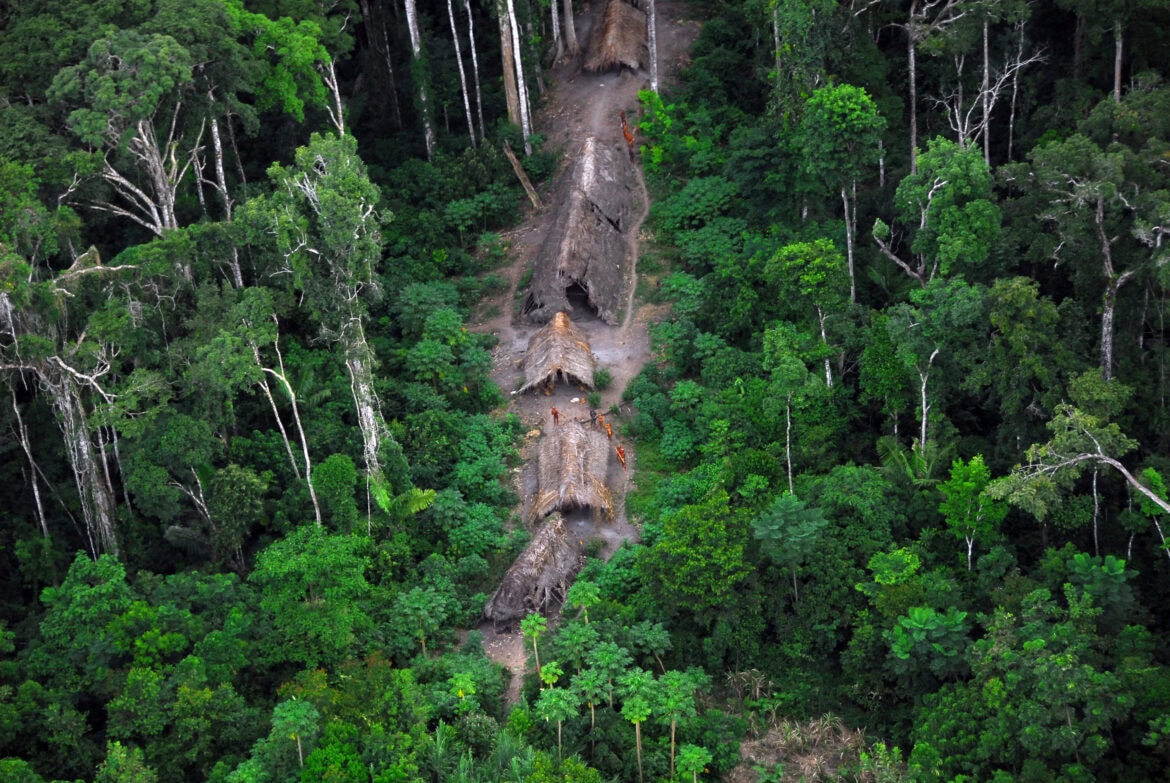
Aerial photo of Isolated Peoples’ settlement in the Brazilian Amazon. Gleison Miranda of FUNAI
The area, located between the Caquetá and Putumayo Rivers, is now off-limits to outsiders. This includes miners, loggers, missionaries, and others whose presence could put the Yuri-Passé at risk. The government worked with Indigenous organizations and mapping experts to draw the boundaries. These groups used satellite imagery, on-the-ground knowledge, and traditional land-use practices to define the territory.
This recognition matters because isolated Indigenous Peoples are often left out of policy discussions. They live with no formal protection, even as outside pressures grow. This decision marks another shift that endorses isolation as a right that the state has a duty to respect.
As important as these two decisions are, the Indigenous Peoples of Colombia will remain as vigilant as ever. They know all too well that laws are only as strong as their enforcement.
The next big step will be to make sure these rights are respected on the ground. That means stopping illegal logging and mining, holding officials accountable, and funding Indigenous-led programs.
Other countries should take note. In an age where indigenous rights are being constantly trampled in the name of resource extraction, environmental defense and climate change, there is another, better, more sustainable way.
Across the world right now, Indigenous peoples are facing a renewed assault on their lands, rights, and ways of life.
From extractive industries pushing deeper into ancestral territories, to governments rolling back hard-won protections,
the threat is global—and it is growing.
What makes this moment especially dangerous is how little attention it receives.
Stories like this are disappearing in real time. Mainstream media
barely covers it and the coverage is fragmented. The public is left without the context
needed to understand what is truly at stake.
That is exactly why IC Magazine exists..
For more than 20 years, IC has reported on Indigenous struggles worldwide — consistently, independently, and without compromise.
We don’t follow news cycles; we trace patterns. We don’t sensationalize; we provide context.
And when the world looks away, we stay focused.
But this work is increasingly difficult to sustain.
We refuse to lock our reporting behind a paywall. We don’t sell access through subscriptions.
And we don’t answer to advertisers. IC Magazine survives solely because readers like you choose to
support independent Indigenous journalism.
Please donate today if you can. Every contribution helps us to continue this crucial work.
Thank you,
John Ahni Schertow
Founder and Editor in Chief