
Last Updated on April 10, 2025
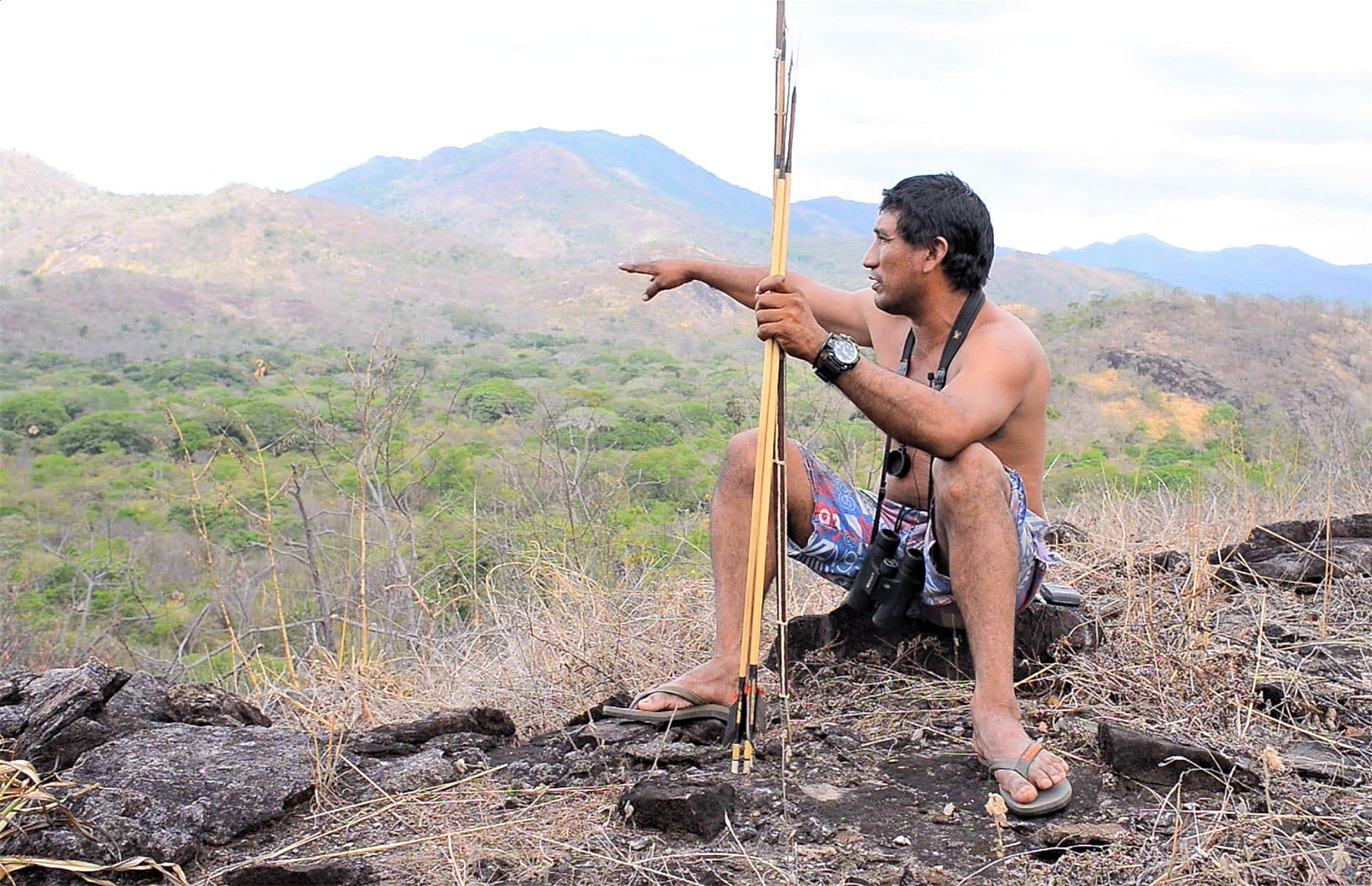
Latin America – “There used to be a lot of wildlife here in my father’s and grandfather’s time: deer, tapir, capybara and peccaries,” explains Asaph, a traditional hunter from the Wapishana Indigenous tribe in the Rupununi region of Guyana. “There are still some animals in the Kanuku Mountains, but they are harder to find.”
Wild meat and fish are important sources of protein and nutrients for Asaph and his family.
According to Asaph, in the past, hunting levels were sustainable. There was a balance between the number of animals hunted for food and natural wildlife reproduction rates. This equilibrium is now under threat, he argues, due to uncontrolled fires, expanding village populations, the construction of new roads and commercial hunting.
To help boost wildlife populations, Asaph is now the vice president of his local conservation group and a wildlife ranger.
“We are trying to conserve this area so that the wildlife will come back.” This will allow him to carry on hunting and feeding his children. “We are trying to educate the youth about conservation,” he emphasizes, “so that they know what is good for the environment and the community.”
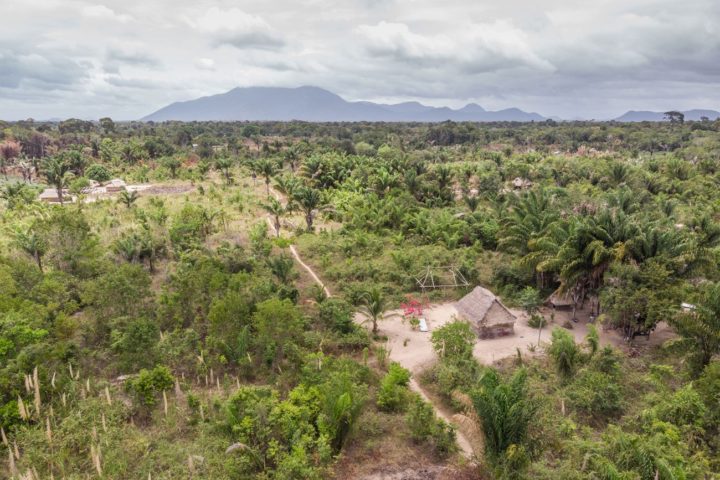
Conservation is important for biodiversity and food security in the Rupununi Region of Guyana. ©FAO/David Mansell-Moullin
Millions of Indigenous and rural people depend on wild meat for their food and income, particularly in the tropical and subtropical regions of South America, Africa and Asia. The demand for wild meat is also growing in towns and cities where it is consumed as a luxury or by tradition. Hunting wildlife for food is now recognized as a major driver of biodiversity loss. Recent studies estimate that 285 mammal species are threatened with extinction due specifically to this type of hunting. If hunting and fishing for wild species are not contained within sustainable levels, then wildlife populations will decline and rural communities will suffer rising levels of food insecurity.
There is an urgent need to find solutions that achieve both sustainable development goals and wildlife conservation. A consortium of international partners, led by FAO, launched the Sustainable Wildlife Management (SWM) Programme in 2017. This programme works together with 13 countries, including Guyana, to return hunting of more resilient species to sustainable levels, reduce urban demand for wild meat and develop alternative sources of affordable and appetizing food for rural communities. In many of these countries, there is also a need to revise and improve hunting laws and land tenure systems, which tend to be ambiguous and poorly enforced.
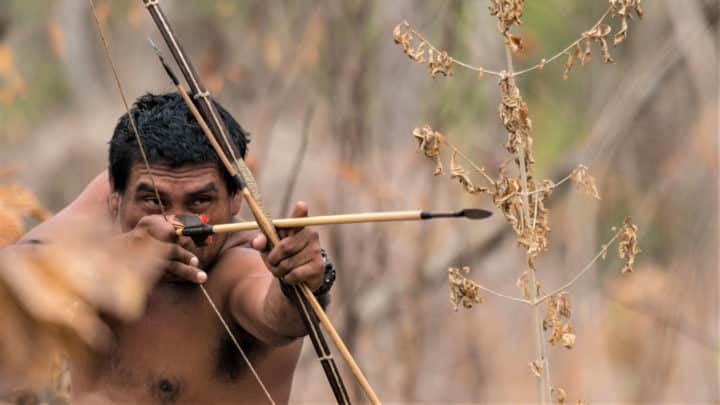
Indigenous peoples are the hereditary custodians of wildlife and critical stakeholders in developing sustainable hunting and fishing strategies. ©FAO/David Mansell-Moullin
In Guyana, the SWM Programme is working closely with Asaph and other Indigenous hunters and conservationists. The aim is to build upon existing community-led projects to maintain healthy fish and mammal populations. After only a year, the programme in the Rupununi region of Guyana has revised a regional fisheries management plan, completed part of an ongoing wildlife census using camera traps, prepared an ecotourism work plan and supported activities with the regional tourism agency, and assessed the potential for livestock development. The hope is that these examples will be replicated elsewhere in Guyana and abroad.
“I would like to see the deer coming back and populating this region again, as they did many years ago,” says Asaph. “Conservation is the key,” he emphasizes.
The SWM Programme is an African, Caribbean and Pacific initiative, funded by the European Union. A dynamic consortium of partners that includes FAO, the Centre for International Forestry Research (CIFOR), Wildlife Conservation Society and the French Agricultural Research Centre for International Development is implementing it. In Guyana, the activities are being carried out by the Guyana Wildlife Conservation and Management Commission in coordination with CIFOR. The SWM Programme is working to return the balance between food security and conservation. This is necessary to create a sustainable, #ZeroHunger world.
Across the world right now, Indigenous peoples are facing a renewed assault on their lands, rights, and ways of life.
From extractive industries pushing deeper into ancestral territories, to governments rolling back hard-won protections,
the threat is global—and it is growing.
What makes this moment especially dangerous is how little attention it receives.
Stories like this are disappearing in real time. Mainstream media
barely covers it and the coverage is fragmented. The public is left without the context
needed to understand what is truly at stake.
That is exactly why IC Magazine exists..
For more than 20 years, IC has reported on Indigenous struggles worldwide — consistently, independently, and without compromise.
We don’t follow news cycles; we trace patterns. We don’t sensationalize; we provide context.
And when the world looks away, we stay focused.
But this work is increasingly difficult to sustain.
We refuse to lock our reporting behind a paywall. We don’t sell access through subscriptions.
And we don’t answer to advertisers. IC Magazine survives solely because readers like you choose to
support independent Indigenous journalism.
Please donate today if you can. Every contribution helps us to continue this crucial work.
Thank you,
John Ahni Schertow
Founder and Editor in Chief