
Last Updated on August 4, 2018
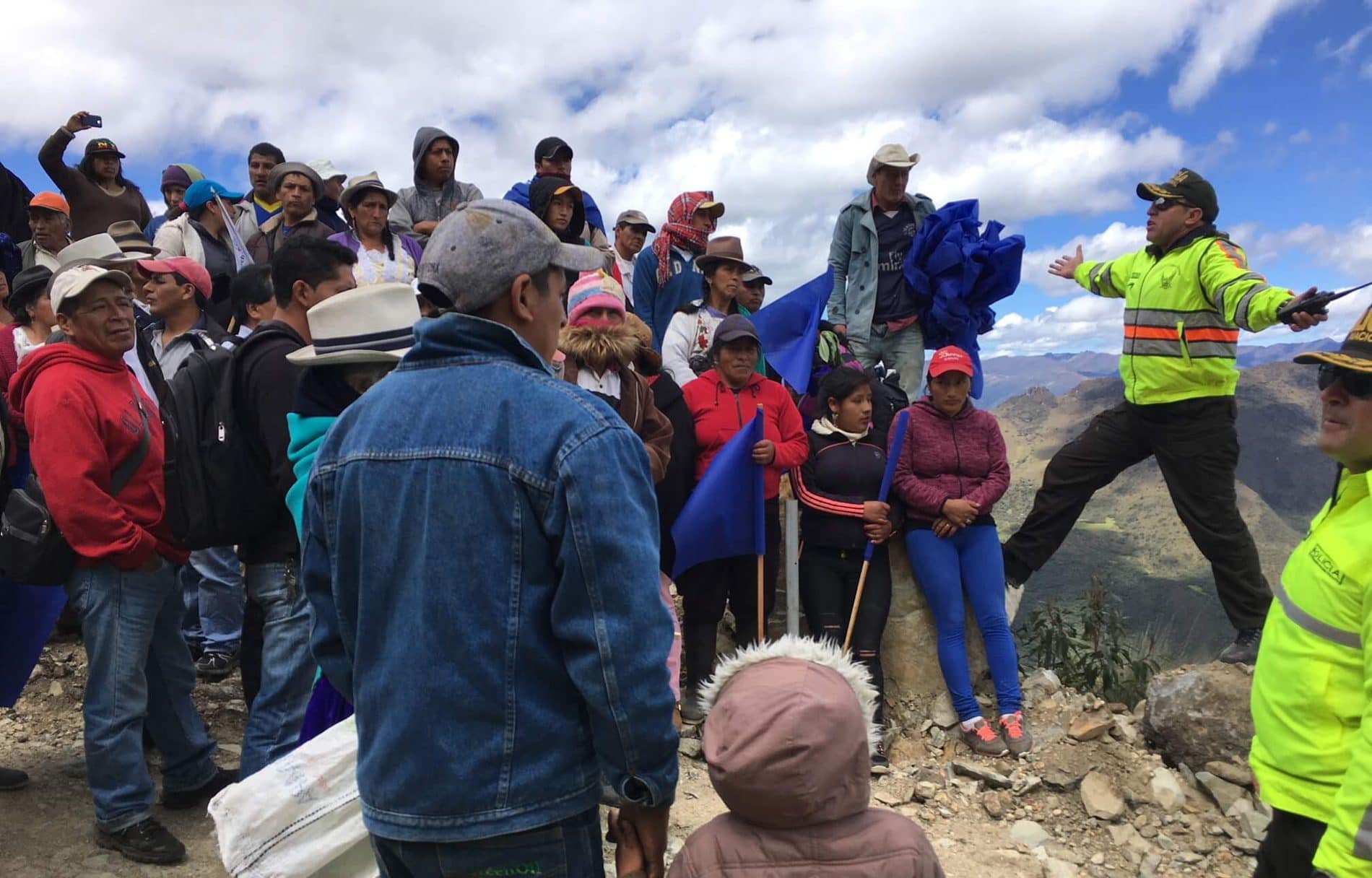
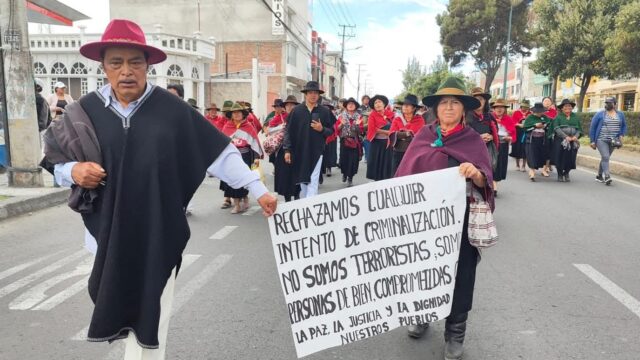
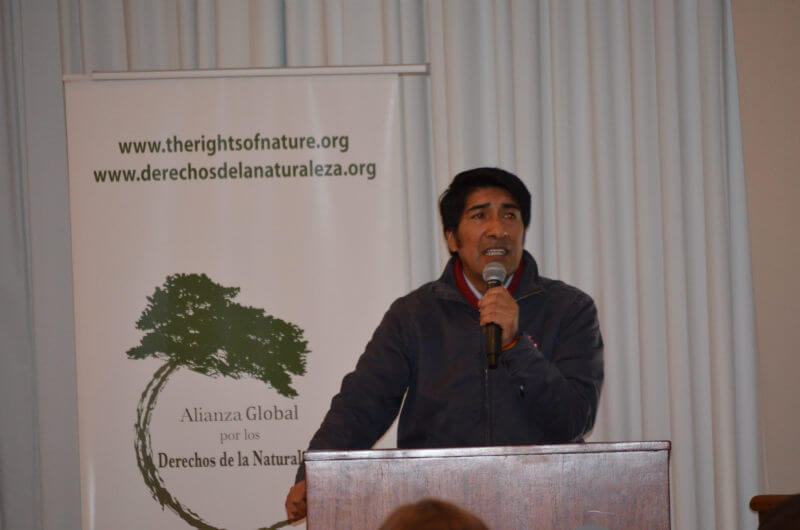
This coming Thursday, April 16th, Carlos Perez Guartambel will have to appear in Ecuadorian court to defend himself against allegations of a coup attempted against President Rafael Correa on September 30th, 2010. The accusation was made by Irina Cabezas, a legislator in Correa’s party, Alianza País.
Pérez Guartambel is a lawyer, having worked in defense of water rights, who has been attacked for his anti-mining activism and jailed three times for it under the current administration. In 2013 he was accused of “terrorism, sabotage, and sedition,” his sentence subsequently reduced by a court that considered his struggle in defense of water to be “altruistic.” He has been named one of the “Front Line Defenders” of human rights, an organization with special consultative status in relation to the United Nations’ ECOSOC. Pérez Guartambel has authored many books related to Indigenous Justice and Water Rights.
Today, he is also the president of ECUARUNARI, the Confederation of Kichwa People of Ecuador. This is the oldest indigenous organization of its kind and has considerable power to mobilize activists, representing around 70% of the nation’s Indigenous Peoples.
ECUARUNARI has been systematically persecuted for its defense of water, as well as:
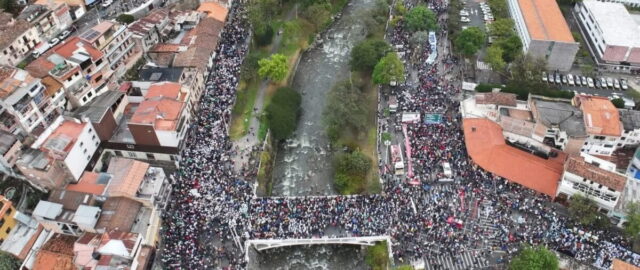
The situation in Ecuador is one of State terrorism. The criminalization of political dissent and social protest has only intensified, with censorship and persecution of everyone from community leaders to cartoonists. The climate has only worsened since the protests of March 19th, 2015, when approximately 70,000 people took to the streets of Quito to protest government policies, with thousands more protesting in other cities. In the days that followed, many journalists were harassed and/or had equipment “stolen.” Pérez Guartambel, who has been under systematic surveillance from government intelligence services, was charged by Cabezas days after the protests, as part of a broad wave of persecution meant to intimidate the opposition.
Across the world right now, Indigenous peoples are facing a renewed assault on their lands, rights, and ways of life.
From extractive industries pushing deeper into ancestral territories, to governments rolling back hard-won protections,
the threat is global—and it is growing.
What makes this moment especially dangerous is how little attention it receives.
Stories like this are disappearing in real time. Mainstream media
barely covers it and the coverage is fragmented. The public is left without the context
needed to understand what is truly at stake.
That is exactly why IC Magazine exists..
For more than 20 years, IC has reported on Indigenous struggles worldwide — consistently, independently, and without compromise.
We don’t follow news cycles; we trace patterns. We don’t sensationalize; we provide context.
And when the world looks away, we stay focused.
But this work is increasingly difficult to sustain.
We refuse to lock our reporting behind a paywall. We don’t sell access through subscriptions.
And we don’t answer to advertisers. IC Magazine survives solely because readers like you choose to
support independent Indigenous journalism.
Please donate today if you can. Every contribution helps us to continue this crucial work.
Thank you,
John Ahni Schertow
Founder and Editor in Chief