Last Updated on January 22, 2026
A coalition of Nigerian and international environmental groups is calling for urgent action to protect Indigenous forest defenders and stop alleged illegal logging in the Ekuri Forest, a biodiverse rainforest once held up as a model of community-led conservation.
The Global Forest Coalition (GFC), citing reports from the Emerging Genderplus Outreach Team (EGOT), said Thursday that tensions surged in mid-January after community members peacefully sought to halt logging in their ancestral forest north of the Cross River National Park. Local youth briefly secured batteries and keys from logging equipment to stop tree felling, sparking legal scrutiny that resulted in the temporary detention of Dr. Martins Egot, a prominent Ekuri environmental defender. Authorities have since dropped all charges against him and released other community leaders without bail, EGOT said.
The advocacy group’s statement, released from Utrecht, Netherlands, says Nigerian authorities must now protect the safety of forest defenders, temporarily halt all logging activities in the area, and ensure that policing does not undermine community-led conservation efforts. The GFC also called for transparent federal and state investigations into whether operations by Ezemac International (Nig.) Ltd. are lawful and compliant with Nigeria’s environmental laws.
Community representatives say police allowed seized logging equipment to be returned to the company without their consent, enabling operations to resume despite questions about legality. GFC noted allegations that armed personnel were present in the forest, a move the coalition said, if verified, would pose a “serious escalation and a direct threat” to local residents.
“Our documentation shows that even as community leaders were subjected to police procedures, logging equipment returned to operation inside ancestral forest lands,” said Aaron Egot, Executive Director of EGOT. “This imbalance of power places women, children, and the entire community at heightened risk. We are now deploying Eco-Guards on a 5-hour foot journey to the remote site to capture photographic evidence of this breach.”
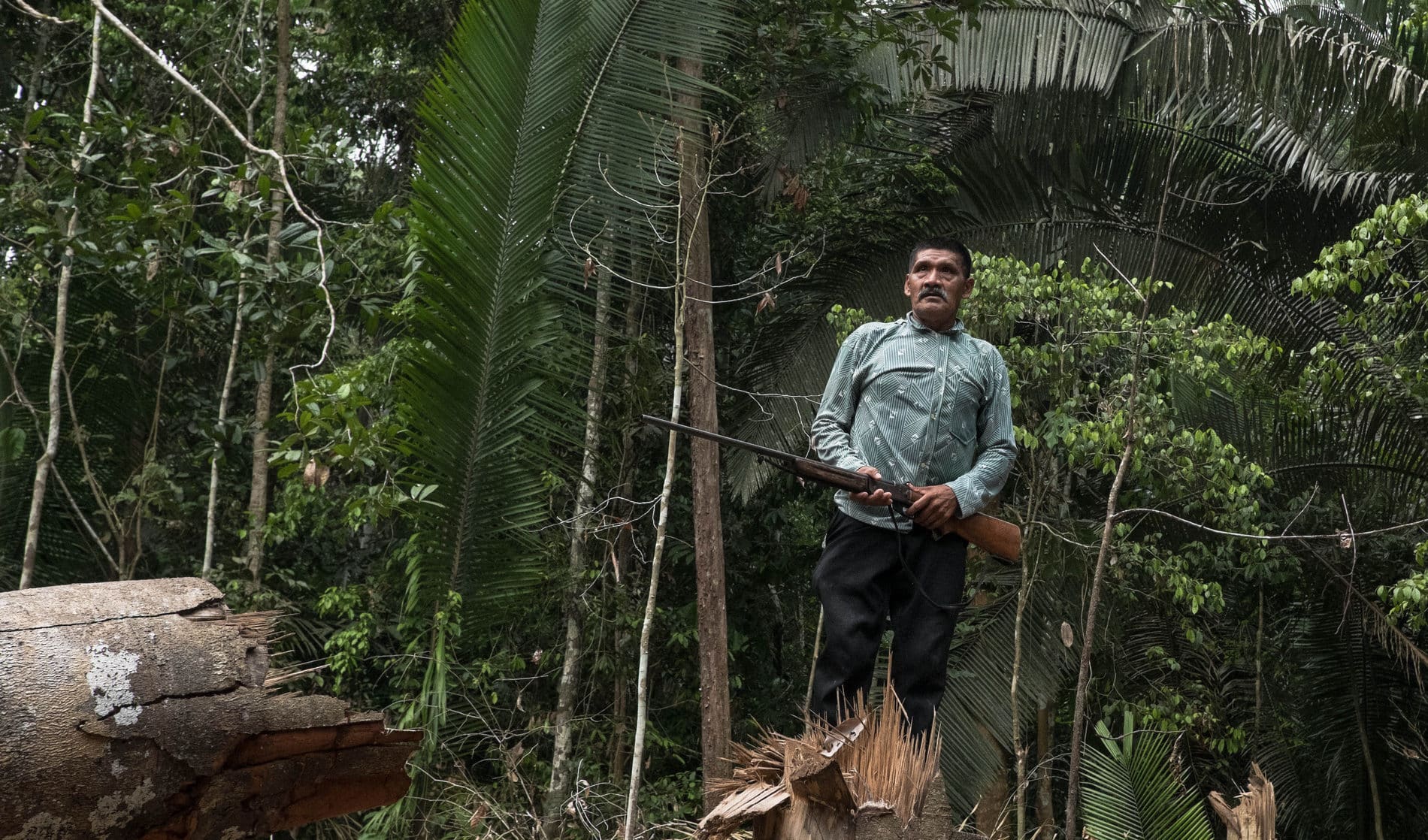
The 33,600-hectare Ekuri Forest has long been managed by the Old and New Ekuri communities, who established one of West Africa’s earliest community-conserved areas in the early 1990s. Local “eco-guards” — unpaid volunteers drawn from the community — patrol its trails for illegal encroachment and protect its wildlife and plant species that include important timber and non-timber resources.
Despite conservation efforts, logging interests and weak enforcement have taken a toll. Independent reporting has documented recurring clashes between residents and logging interests, and experts say lax enforcement of forestry laws has allowed unauthorized timber extraction to continue.
Environmental defenders in Nigeria and across Africa operate in an increasingly hostile environment. A 2025 report from Global Witness found that environmental activists face escalating threats, with scores killed or disappeared globally in 2024 as they defend land and forests.
The GFC urged Nigerian authorities to withdraw any armed presence from Ekuri Forest, ensure accountability where violations are established, and work with local institutions on reforestation and sustainable development, including community-led forest monitoring.
Local civil society organizations have separately criticized what they describe as government inaction on illegal logging across Cross River’s forest communities. Earlier reporting highlighted concerns that weakened enforcement of the 2008 logging ban has emboldened unlicensed loggers whose activities deplete valuable species and threaten wildlife habitat.
Across the world right now, Indigenous peoples are facing a renewed assault on their lands, rights, and ways of life.
From extractive industries pushing deeper into ancestral territories, to governments rolling back hard-won protections,
the threat is global—and it is growing.
What makes this moment especially dangerous is how little attention it receives.
Stories like this are disappearing in real time. Mainstream media
barely covers it and the coverage is fragmented. The public is left without the context
needed to understand what is truly at stake.
That is exactly why IC Magazine exists..
For more than 20 years, IC has reported on Indigenous struggles worldwide — consistently, independently, and without compromise.
We don’t follow news cycles; we trace patterns. We don’t sensationalize; we provide context.
And when the world looks away, we stay focused.
But this work is increasingly difficult to sustain.
We refuse to lock our reporting behind a paywall. We don’t sell access through subscriptions.
And we don’t answer to advertisers. IC Magazine survives solely because readers like you choose to
support independent Indigenous journalism.
Please donate today if you can. Every contribution helps us to continue this crucial work.
Thank you,
John Ahni Schertow
Founder and Editor in Chief